
PART 1
“I think my dad did this to me… but please don’t take him away.”
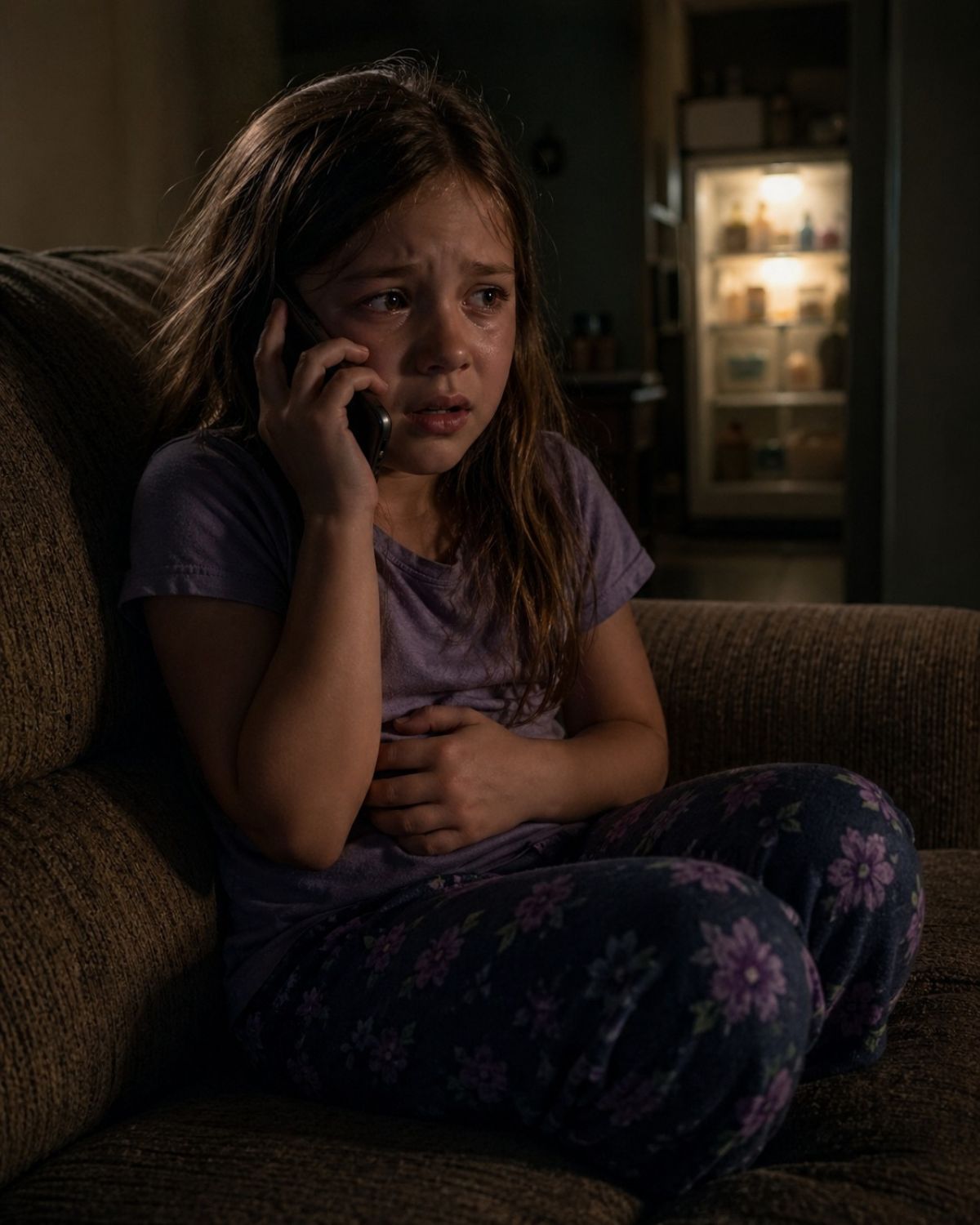
That was the first thing eight-year-old Sofía Morales whispered when she managed to dial 911 on her mother’s cell phone.
She was huddled on the old living room couch, one hand clutching her stomach and the other trembling so much she almost dropped the phone. Outside, in a working-class neighborhood of Ecatepec, motorcycles could still be heard passing by, dogs barking, and a television blaring from the house next door.
But inside the Morales home, everything was dark.
Only the refrigerator light flickered, as if it too was afraid.
Sofía had been saying her stomach hurt for several days. Her father, Miguel, had promised to take her to the doctor “tomorrow,” as soon as he got off his shift at the small store where he worked before dawn. Her mother, Teresa, could barely move because of a severe back injury.
So Sofia endured it.
She endured it because she didn’t want to worry her mother. She endured it because she knew her father always came home tired. She endured it because in her house the word “tomorrow” was used for everything: to pay bills, to rest, to go to the doctor.
But that night the pain became unbearable.
“Did your father hit you?” the operator asked softly.
Sofia cried harder.
“I don’t know… it started after I ate what my father and Don Arturo gave me for dinner.”
The operator was silent for a second.
“Who is Don Arturo?”
“The neighbor,” Sofia murmured. “Sometimes he brings us food. He helps my father when we don’t have enough money.”
Don Arturo was the kindest man on the block. The one who carried water jugs. The one who lent a hundred or two hundred pesos without making a fuss. The one who brought food “because he had some left over.” Everyone said he was a good person.
That night he had arrived with stew tacos.
Miguel, exhausted, told Sofía to eat, not to be rude. She obeyed. Later, the pain worsened. Don Arturo took out a small, unlabeled bottle and said they were digestive drops.
“Two drops and it’ll be fine,” he assured her.
Miguel, washing dishes, barely turned around.
“If it helps, give them to her.”
Minutes later, the ambulance arrived, its red lights illuminating the entire street. Neighbors opened their doors and windows. When the paramedics lifted Sofía’s blouse slightly to examine her, they looked at each other without saying a word.
Her abdomen was alarmingly swollen.
“Prepare pediatric emergency,” one of them said over the radio.
As Sofía was being taken away on a stretcher, a patrol car arrived at the small store where Miguel was arranging sodas, still wearing his apron.
“Mr. Morales, you have to come with us.”
Miguel dropped the box. The bottles rolled across the floor.
“Is that my daughter?”
The police officer took too long to answer.
“Your daughter called 911. She said she thinks you and a neighbor might have hurt her.”
Miguel went white.
“No… I would never hurt my little girl.”
But outside, people were already watching.
And when Miguel arrived at the hospital, Teresa was crying in a wheelchair, the police were asking questions, and Don Arturo was nowhere to be seen.
Then a doctor came out with such a serious face that everyone stopped breathing.
Because what they found in Sofía’s body didn’t confirm the accusation as everyone expected.
It revealed something worse.
And no one could believe what was about to happen.
