
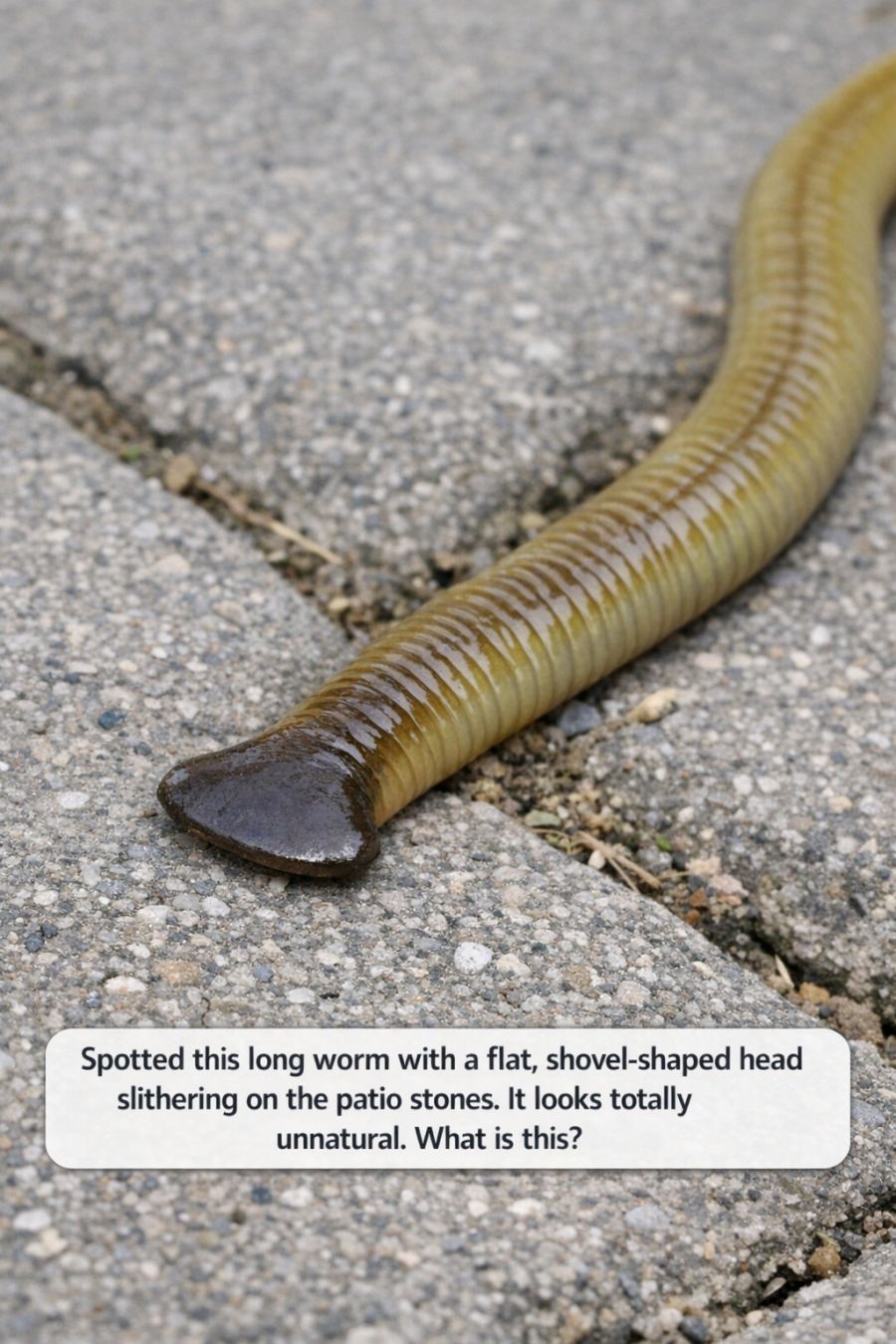
It’s not every day that you encounter a creature so strange it seems to have crawled out of a science fiction novel. Yet for many homeowners, the sight of a long, flat worm with a distinctive shovel-shaped head slithering across the patio is becoming increasingly common. This peculiar creature, known as the hammerhead worm, is both intriguing and alarming due to its alien-like appearance and potential impact on local ecosystems.
Hammerhead worms are a type of terrestrial flatworm that have attracted attention because of their unusual appearance and predatory behavior. Originally native to Southeast Asia, these worms have spread to many parts of the world, often hitching rides in the soil of imported plants. As their presence becomes more widespread, it’s important to understand what these creatures are, how to identify them, and what to do if you find one in your yard.
1. Meet the Hammerhead Worm: The Bizarre Creature on Your Patio
The hammerhead worm, or Bipalium, is a genus of predatory land flatworms known for its distinctive head shape, which resembles that of a hammerhead shark. These worms can grow quite long, often reaching lengths of 8 to 12 inches (20 to 30 centimeters), although some species can grow even longer.
Their bodies are typically flattened and slimy, with colors ranging from brown to gray, often with darker stripes running down their length.
Unlike earthworms, which are beneficial to garden ecosystems, hammerhead worms are carnivorous and primarily prey on other invertebrates, including earthworms. They can reproduce asexually through fragmentation, meaning a single worm can break apart and each segment can grow into a new worm. This ability allows them to spread quickly in new environments.
2. How to Identify a Hammerhead Worm at a Glance
Identifying a hammerhead worm is relatively easy due to its unique features. The most notable characteristic is its head, which is flattened and expanded into a spade- or hammer-like shape, distinguishing it from other worms.
Their bodies are long, slender, and distinctly flattened. Their coloration can also help with identification. Many hammerhead worms are brown or gray with darker longitudinal stripes, while others may have a more uniform color.
They are commonly found in moist environments such as gardens, under rocks, or on patios after rainfall, as they thrive in damp conditions.
3. Why Hammerhead Worms Look So Unnatural and Alien
The appearance of hammerhead worms can be unsettling, largely due to their unusual body shape and movement. The flat, elongated body and distinctive head shape are unlike most worms commonly found in gardens.
Combined with their glossy, slimy surface, these features give them an almost otherworldly look.
Their movement also adds to this effect. Rather than contracting in segments like earthworms, hammerhead worms glide smoothly over surfaces using tiny hair-like structures called cilia on the underside of their bodies.
4. Where Hammerhead Worms Come From and How They Spread
Hammerhead worms are native to Southeast Asia but have become invasive in many other parts of the world, including North America and Europe.
They are often unintentionally introduced through the importation of plants and soil, as they can survive transport in moist environments.
Once established, hammerhead worms spread rapidly due to their unusual reproductive strategy. Because they reproduce through fragmentation, a single worm can break into multiple pieces, each of which can develop into a fully formed worm. This ability, combined with the lack of natural predators in many new environments, allows their populations to grow quickly.
5. Are Hammerhead Worms Dangerous to People or Pets?
Hammerhead worms are not directly dangerous to humans or pets. They do not bite, sting, or transmit diseases.
However, they secrete a slime that contains toxins, which may cause skin irritation if handled directly.
Although they are not a direct threat to people or animals, their presence is concerning because of their impact on local ecosystems, especially their predation on beneficial earthworms. For safety, it’s best to avoid direct contact or handle them with gloves.
6. The Real Threat: How Hammerhead Worms Attack Earthworms
Hammerhead worms pose a serious threat to earthworms, which are essential for maintaining healthy soil.
They capture their prey by secreting a sticky mucus that immobilizes the earthworm.
Once captured, the hammerhead worm extends a feeding organ called an eversible pharynx, releasing digestive enzymes that break down the earthworm’s tissues. The worm then absorbs the liquefied nutrients.
This predatory behavior can significantly reduce earthworm populations, which in turn harms soil quality and plant growth.
7. Toxic Slime and Neurotoxins: The Science Behind Their Venom
Hammerhead worms produce a toxin called tetrodotoxin, the same powerful neurotoxin found in pufferfish.
This toxin serves both defensive and predatory purposes. When threatened, the slime they secrete can deter predators due to its unpleasant taste and toxicity.
Although the amount of tetrodotoxin present is generally not dangerous to humans, it is strong enough to immobilize their prey and may cause mild skin irritation upon contact.
8. What to Do If You Find a Hammerhead Worm in Your Yard
If you spot a hammerhead worm in your yard, stay calm but take appropriate action.
Avoid touching the worm directly, as its slime may cause irritation. If you need to handle it, use gloves or a tool.
Importantly, do not cut the worm, as each fragment can regenerate into a new individual, potentially worsening the problem.
9. Safe Ways to Kill Hammerhead Worms Without Making It Worse
To eliminate hammerhead worms effectively, use methods that prevent regeneration.
Sprinkling salt or spraying vinegar directly onto the worm is commonly recommended. These substances dehydrate the worm and prevent it from regenerating.
Afterward, place the worm in a sealed plastic bag before disposing of it to ensure it cannot return to the environment.
10. How to Prevent Future Hammerhead Worm Infestations
Preventing infestations involves a combination of monitoring and garden maintenance.
Regularly inspect your garden and any newly purchased plants or soil for signs of these worms. Keeping your garden tidy and reducing moist hiding places such as debris and leaf piles can help discourage them.
Staying vigilant and identifying hammerhead worms early can help prevent them from becoming established.
11. Why This Strange Invader Matters for Your Garden and Local Ecosystem
Despite their small size, hammerhead worms can have a significant ecological impact.
By preying on earthworms, they disrupt the natural processes that improve soil health, including aeration and nutrient cycling. This can eventually lead to poorer soil quality and reduced plant growth.
Their spread highlights the delicate balance of ecosystems and the potential consequences of introducing non-native species. Understanding and managing hammerhead worms is an important step in protecting local environments.
