
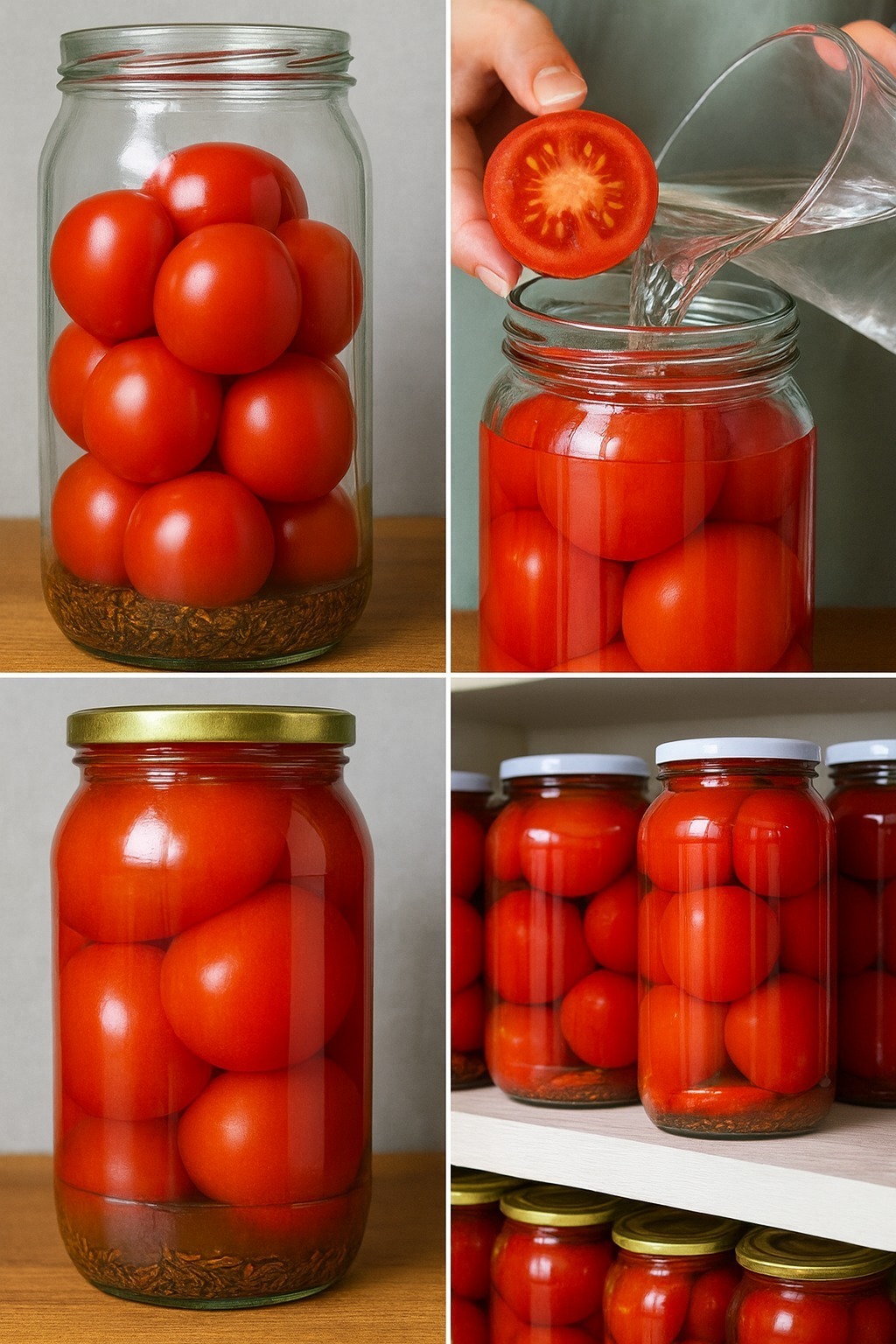
You’ve probably seen it: a social media post claiming you can store fresh, whole tomatoes for up to two years without canning, freezing, or even a drop of vinegar—just by layering them in a jar with oil or salt. It sounds miraculous. Too good to be true, in fact.
And that’s because it is.
Let’s be clear: there is no safe, scientifically sound method to preserve whole, raw tomatoes at room temperature for 2 years without proper acidification, refrigeration, or freezing. Tomatoes are low-acid vegetables (pH ~4.3–4.9), making them a high-risk food for Clostridium botulinum—the bacteria that causes botulism, a potentially fatal form of food poisoning.
But don’t lose hope! While the “2-year fresh tomato” myth is dangerous, there are safe, time-tested ways to enjoy summer tomatoes all year long—without vinegar if you prefer. Let’s separate fact from fiction and share the real infallible methods that actually work.
Why the “Oil + Salt = 2-Year Tomatoes” Method Is Dangerous
The viral method usually goes like this:
“Layer whole cherry tomatoes in a sterilized jar, cover with olive oil, add garlic and herbs, seal, and store in a cool, dark place for up to 2 years.”
Why this is risky:
Tomatoes (especially when whole or cut) create an anaerobic (oxygen-free) environment under oil—exactly what C. botulinum needs to grow.
Olive oil, salt, and garlic do not raise acidity enough to prevent botulism.
Room-temperature storage accelerates bacterial growth.
The USDA, FDA, and National Center for Home Food Preservation all warn against storing fresh tomatoes in oil at room temperature. Refrigeration slows but doesn’t stop risk—these should be eaten within 3–5 days.
Real Ways to Preserve Tomatoes for Months (Even 2 Years!)—Safely
1. Freezing Whole or Sliced Tomatoes (No Vinegar, No Cooking!)
How: Wash and dry tomatoes. Place on a baking sheet, freeze solid, then transfer to freezer bags.
Texture: Soft when thawed (not for salads), but perfect for soups, sauces, and stews.
Shelf life: 12–18 months in a deep freezer (0°F/-18°C).
Bonus: No blanching or peeling needed—skins slip off easily after thawing!
2. Oven-Dried or Dehydrated Tomatoes (Oil-Packed—Safely!)
How: Slice tomatoes, dry in a low oven (170°F/77°C) or dehydrator until leathery (6–12 hours).
Storage:
Dry-packed: Store in airtight jars at room temp for 6–12 months.
Oil-packed: Only if fully dried and stored in the refrigerator—use within 2–3 months.
Tip: Add vinegar or lemon juice to oil if you want extra safety (but not required for dry tomatoes).
3. Pressure Canning (For Low-Acid Tomato Products)
For: Whole tomatoes, tomato juice, or sauce without added acid.
Why pressure canning? It reaches 240°F (116°C)—hot enough to kill botulism spores.
Shelf life: 12–24 months in a cool, dark pantry.
Note: Water-bath canning requires added acid (lemon juice or citric acid)—about 1 tbsp per pint.
4. Fermented Tomatoes (Savory, Probiotic, Vinegar-Free)
How: Submerge cherry tomatoes in a 2–3% salt brine (no vinegar!). Ferment at room temp for 5–10 days, then refrigerate.
Shelf life: 6–12 months in the fridge.
Flavor: Tangy, umami-rich—great in grain bowls or as a condiment.
Methods to Avoid (Despite What the Internet Says)
Method
