
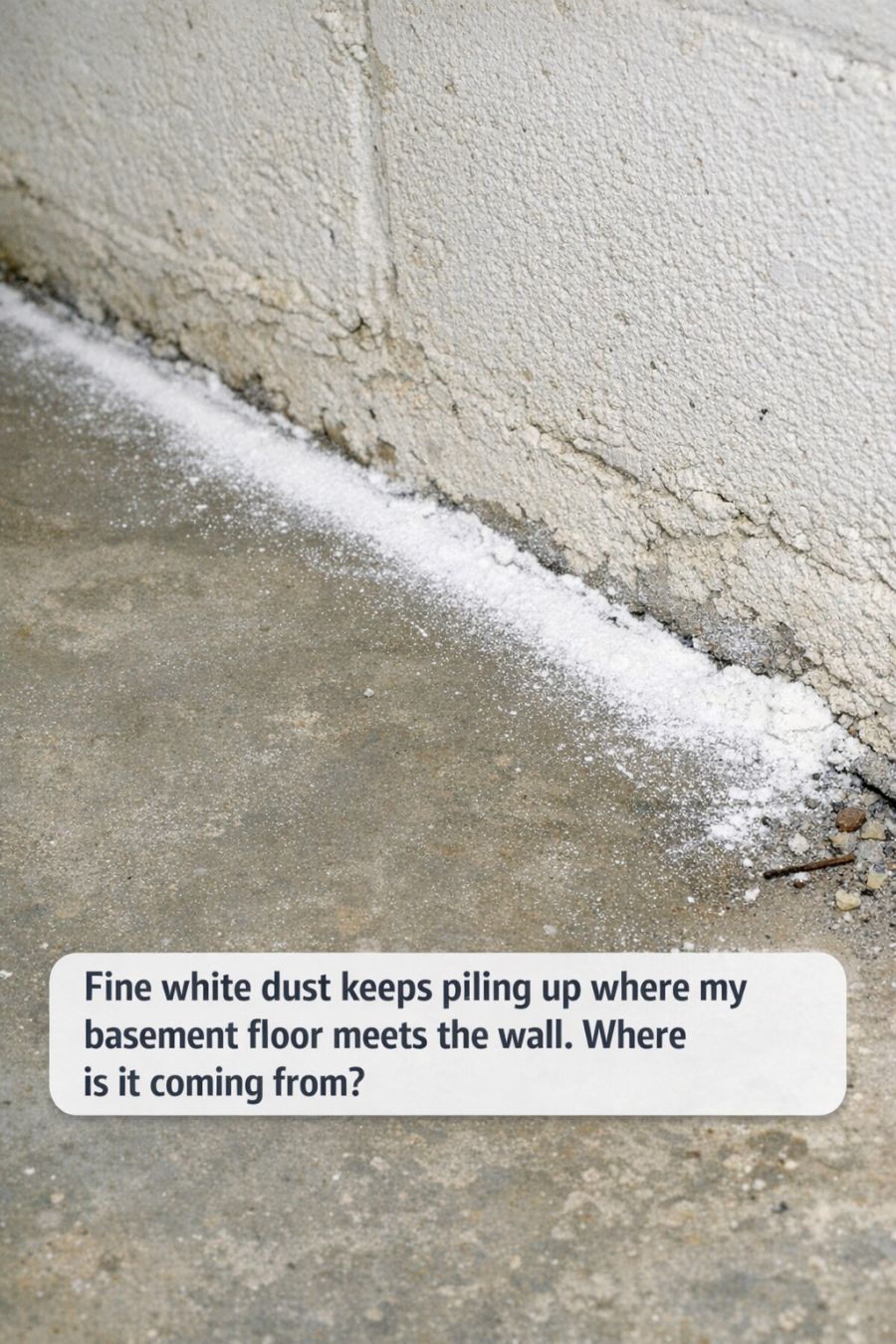
Fine white dust keeps piling up where my basement floor meets the wall. Where is it coming from?
1. What That Mysterious Fine White Dust Actually Is
The fine white dust accumulating in your basement is often a result of a few different processes. One of the most common is efflorescence, which is a crystalline deposit of salts that can form when water is present on or near the surface of concrete or masonry. These salts are usually white and can appear as a powdery substance.
Efflorescence occurs when water seeps through the concrete, dissolving salts within. When the water reaches the surface and evaporates, it leaves the salt behind as a white residue. This process can be exacerbated by high humidity levels, poor drainage, or inadequate waterproofing of your basement walls and floor.
2. How Concrete Moisture Leaching Creates Basement Floor Dust
Concrete moisture leaching is a significant cause of dust in basements. Water from the ground, rain, or plumbing leaks can penetrate the concrete, dissolving minerals such as calcium hydroxide. As this water moves through the concrete and reaches the surface, it evaporates, leaving behind salts and minerals as a fine, white powder.
This leaching process can be intensified by environmental factors, including high humidity, temperature fluctuations, and poor ventilation. The dust can accumulate over time, becoming more noticeable and problematic if left unaddressed.
3. Efflorescence: The Most Common Culprit Along Wall-Floor Joints
Efflorescence is particularly common along wall-floor joints in basements due to the way water moves through and around the foundation. These areas are often more prone to moisture infiltration, especially if there are cracks or gaps that allow water in.
The salts responsible for efflorescence are usually present in the soil surrounding the basement or within the concrete itself. When water carries these salts to the surface, they crystallize upon evaporation. Addressing efflorescence involves controlling moisture levels and improving drainage around the home.
4. When Crumbling Mortar Or Concrete Starts Shedding Powder
Crumbling mortar or deteriorating concrete can also be a source of fine white dust in your basement. Over time, the binder in concrete and mortar can break down due to chemical reactions or mechanical stress, leading to the shedding of particles.
Signs of this type of deterioration include visible cracks, flaking, or pitting in the surface. Regular inspection and maintenance of your basement walls and floor can help identify these issues early, allowing for timely repairs.
5. Could It Be Drywall Dust Or Old Construction Debris?
In some cases, the dust may not be from the concrete or masonry itself but rather from leftover construction materials. If your basement was recently renovated, drywall dust from sanding can settle in corners and along joints, contributing to the white powdery buildup.
Additionally, old construction debris or remnants from previous renovations may resurface, especially if work was done hastily or without thorough cleanup. A careful cleaning of the area can determine whether this is the source of your dust problem.
6. Ruling Out More Serious Risks Like Asbestos Or Lead
While less common, it’s crucial to rule out the presence of hazardous materials like asbestos or lead, especially in older homes. Asbestos fibers can become airborne and resemble dust if disturbed, posing serious health risks.
If your home was built before the 1980s, there’s a possibility that some materials may contain asbestos or lead-based paint. Professional testing is advised to ensure that these hazardous substances are not present, as they require specialized handling and removal.
7. How To Test Whether The Dust Is From Moisture Or Deterioration
Testing the dust can help determine its origin. A simple moisture test can be conducted by taping a piece of plastic or aluminum foil to the affected area, sealing the edges. After 24 hours, check for condensation under the plastic. Moisture indicates water penetration and possible efflorescence.
For more detailed analysis, a chemical test kit can identify specific salts or minerals present in the dust. This can help confirm whether the issue is related to moisture leaching or material degradation.
8. Fixing The Source: Managing Water And Humidity Around The Foundation
Addressing the root cause of the dust involves managing water and humidity levels around your basement. Ensure gutters and downspouts direct water away from the foundation. Grading the soil around your home can also help prevent water pooling.
Installing a dehumidifier in the basement can reduce humidity levels, minimizing moisture-related issues. Waterproofing treatments or coatings can be applied to basement walls and floors to create a barrier against water intrusion.
9. Sealing Cracks, Joints, And Porous Concrete To Slow The Dust
Sealing cracks and joints in the basement can prevent water from seeping through and causing efflorescence or deterioration. Use a high-quality concrete sealant or epoxy to fill any visible gaps.
For porous concrete, a penetrating sealer can be applied to reduce moisture absorption. Regular maintenance and inspection of these areas can prevent future dust accumulation and extend the life of your basement floor and walls.
10. Safe Cleanup Strategies So The Dust Doesn’t Keep Coming Back
When cleaning up dust, it’s important to use methods that prevent it from resettling. Start by vacuuming the area with a vacuum equipped with a HEPA filter to capture fine particles.
Wipe surfaces with a damp cloth to pick up remaining dust, and avoid sweeping, which can spread particles into the air. Regular cleaning and monitoring of the basement environment can help keep dust at bay.
11. When It’s Time To Call A Pro For Inspection Or Repairs
If the dust persists despite your best efforts, or if you’re unsure about the source, it’s time to call in a professional. A structural engineer or basement specialist can conduct a thorough inspection to identify underlying issues.
