
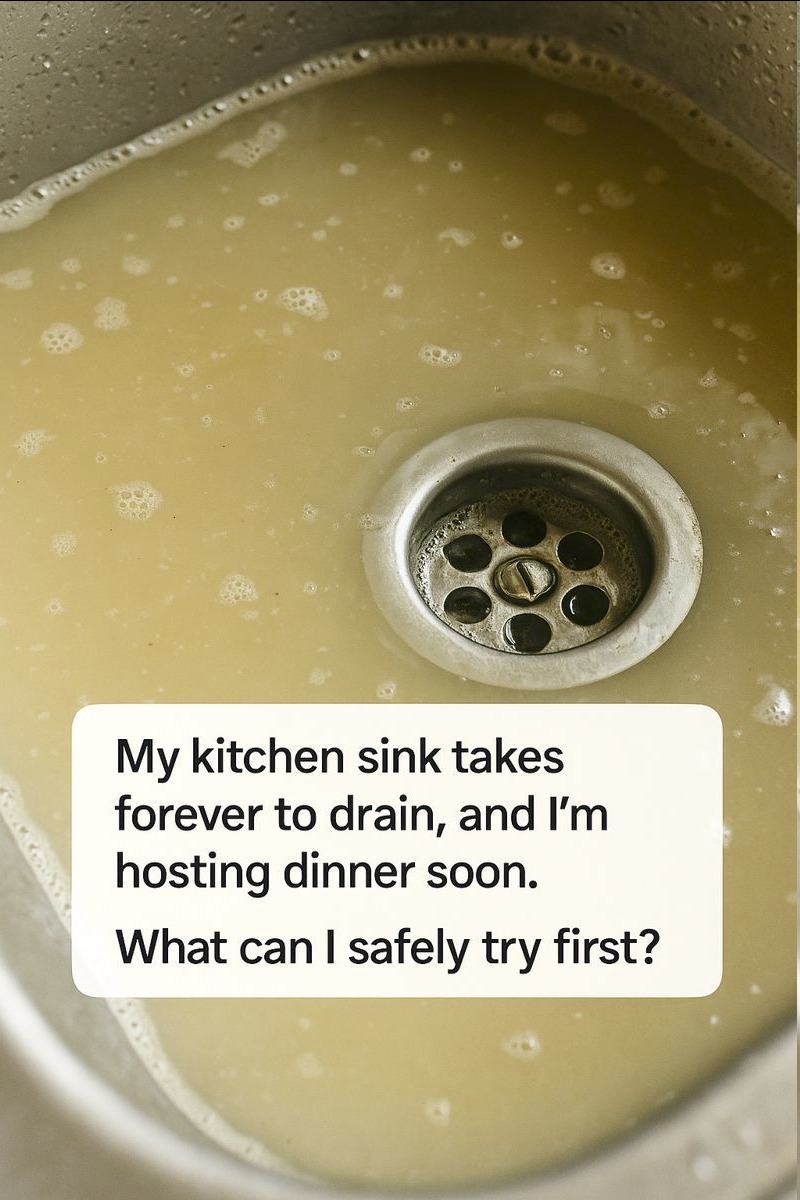
3. Try the Classic Boiling Water Flush — Safely and in Stages
Boiling water is one of the simplest and safest methods to try first. Boil a kettle or large pot of water. Once it’s boiling, carefully pour it down the drain in stages, allowing it to work for a minute or two between pours. This can help to melt and dislodge any grease that might be causing the clog.
Remember to pour the water directly down the drain, avoiding any porcelain or ceramic surfaces that might crack under the heat. Repeat the process two to three times for maximum effectiveness.
4. Use Baking Soda and Vinegar the Right Way for Grease Buildup
Baking soda and vinegar are a tried-and-true method for dealing with minor clogs and grease buildup. Start by pouring about a half cup of baking soda into the drain, followed by a half cup of white vinegar. The chemical reaction will create fizzing, which helps to break down the clog.
Cover the drain with a plug or cloth to keep the reaction contained. Let it sit for at least 15 minutes, then flush the drain with hot water. This method is effective for mild clogs and can be repeated if necessary.
5. Boost the Vinegar Hack With Hot Water and a Short Wait
After the baking soda and vinegar reaction, wait for about 15 minutes to allow the mixture to break down the grease. Boil a kettle of water and pour it down the drain to flush the dissolved residue. This helps to clear any remaining particles and ensures that the drain is clean.
It’s important to be patient and let the reaction do its work before rinsing with hot water, as prematurely flushing the drain can reduce the effectiveness of the process.
6. Deploy a Sink Plunger Without Splashing Grease Everywhere
If the drain is still slow, a sink plunger can help. Make sure you have a plunger specifically designed for sinks, which is smaller and has a flat rim. Fill the sink with enough water to cover the plunger’s cup, then place the plunger over the drain and plunge vigorously.
Be cautious of splashing, especially if there’s grease involved. Keep a towel handy to wipe up any spills, and remember to clean the area thoroughly afterward. The suction created by the plunger can help dislodge stubborn clogs.
7. Clean the Sink Stopper, Basket Strainer, and Visible Gunk
Sometimes, the source of the clog is right at the drain opening. Remove the sink stopper or basket strainer and clean it thoroughly. Use a brush or cloth to remove any visible gunk or debris that might be obstructing water flow.
Check the drain for any obvious blockages that can be removed manually. Clearing away this surface debris can improve drainage and prevent further buildup.
For Complete Cooking STEPS Please Head On Over To Next Page Or Open button (>) and don’t forget to SHARE with your Facebook friends
