
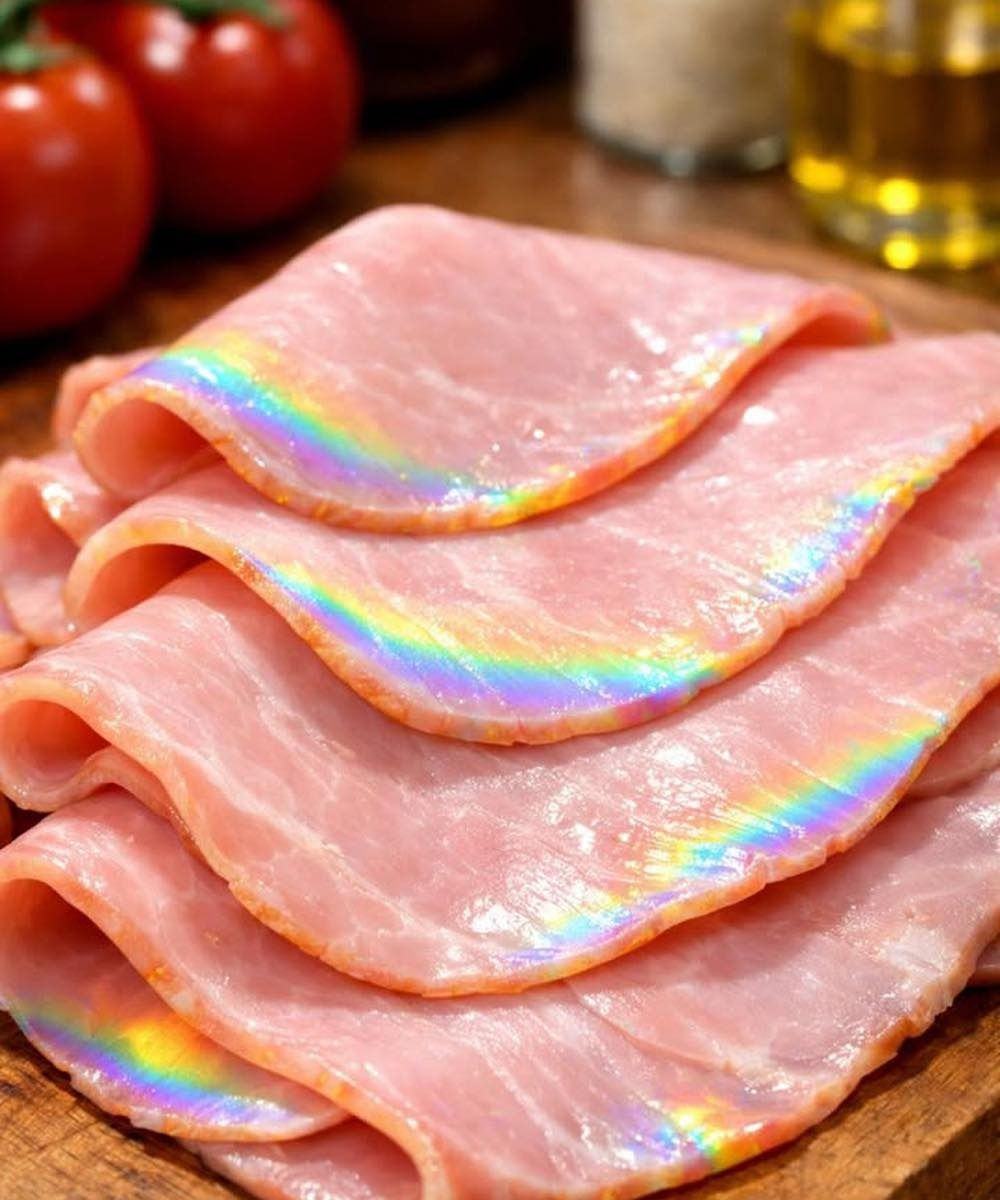
7. Additives, Curing, and Why Some Hams Appear Shinier
Certain ingredients and curing techniques can affect the intensity of cooked ham’s iridescence. Phosphates, for example, are commonly used to help the meat retain moisture and improve its texture. These additives can alter the way light passes through the meat, making the iridescent shine more noticeable.
The curing process itself, which typically involves the use of salt and nitrates, also alters the surface texture of the meat. These changes can increase light diffraction, which is why cured or smoked hams often have a more vivid and shiny appearance than uncured varieties.
8. Storage errors that turn a harmless shine into spoilage
Proper storage is essential to keeping cooked ham safe to eat. Ham should always be stored in the refrigerator at temperatures below 4°C (40°F) to limit bacterial growth. Storing it in airtight containers or tightly wrapping it in plastic wrap helps preserve its freshness and reduces exposure to contaminants.
It’s equally important to check the expiration date and consume ham within a few days of opening. Leaving ham uncovered or storing it at high temperatures can accelerate spoilage and cause unpleasant odors or textures.
9. Know when to throw it away and when it’s still safe
The decision to throw away cooked ham should be based on what you see, smell, and touch. Any signs of unusual coloration, visible mold, or a foul odor indicate that the meat should be discarded immediately. A sticky or slimy surface is another clear sign that it’s no longer edible.
On the other hand, if the only abnormality is an iridescent sheen and the ham otherwise has a normal odor and texture, it is usually safe to eat. Trust your senses, and when in doubt, it’s always safest to throw it away.
