
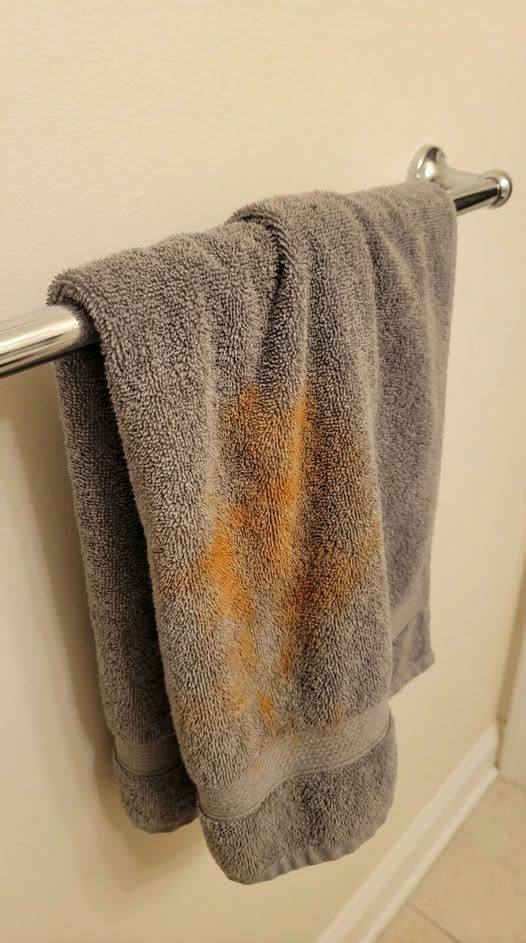
If you’ve noticed strange orange or faded patches on your towels, the most likely cause is benzoyl peroxide — a common ingredient in acne treatments. It’s found in products like PanOxyl, Clearasil, Neutrogena, and various prescription creams.
Benzoyl peroxide works wonders for breakouts, but it’s also a powerful oxidizing agent. In simple terms, it acts much like bleach. When it comes into contact with fabric, it doesn’t leave a traditional stain — it actually strips the dye from the material.
Why the Discoloration Looks Orange
On darker towels — such as navy, gray, or black — the bleaching process often exposes underlying pigments. Once the darker dyes are removed, you’re left seeing orange, yellow, or even pink tones that were hidden beneath.
Here’s a quick way to identify the difference:
- Lighter or faded patches → likely bleach damage
- Darker marks → typical stains
Why You Can’t Wash It Out
When fabric dye is removed, it cannot be restored. No amount of scrubbing, soaking, or specialty detergent will bring back the original color.
In fact, washing affected towels with other laundry can transfer leftover product residue, potentially causing additional fading on other items.
Other Causes That May Look Similar
Although benzoyl peroxide is usually responsible, a few other issues can create comparable discoloration:
Rust in the water: Older plumbing or iron-heavy well water can leave reddish-brown streaks on clothing and linens. This typically affects multiple laundry items — not just towels used on your face.
Serratia marcescens: This moisture-loving bacteria thrives in damp bathrooms and shows up as a pink or orange film. Unlike bleach damage, it can generally be cleaned away using disinfectant or regular bleach.
