
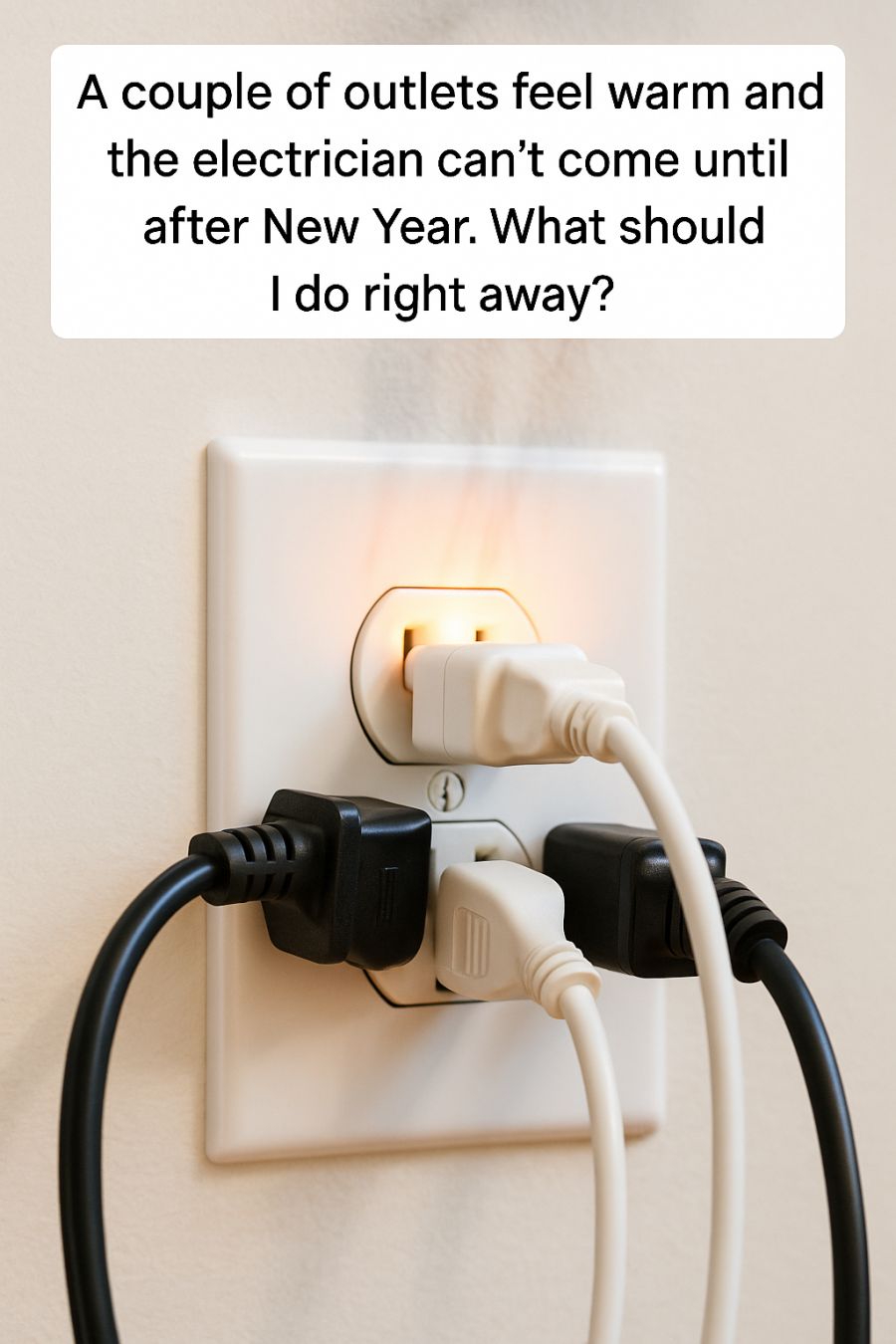
A couple of outlets feel warm and the electrician can’t come until after New Year. What should I do right away?
1. Why Warm Outlets Are a Red-Flag Emergency, Not a Minor Quirk
Warm outlets are a red-flag emergency because they can indicate an underlying electrical issue that poses a significant fire hazard. An outlet that feels warm to the touch may be experiencing an overload, where too much current is passing through the circuit, causing it to overheat. In some cases, the warmth could also be due to loose or corroded connections within the outlet, which increases resistance and generates heat.
The National Fire Protection Association (NFPA) notes that electrical failures or malfunctions are a leading cause of house fires. With temperatures at the outlet exceeding 120 degrees Fahrenheit, materials surrounding the outlet, such as insulation or wall coverings, can ignite, leading to a potentially devastating fire. Therefore, it’s crucial to address warm outlets immediately to prevent any risk of fire.
2. Identify Which Outlets Are Affected and Stop Using Them Immediately
The first step in addressing warm outlets is to identify which ones are affected. Carefully inspect each outlet in your home by gently placing the back of your hand on them to feel for warmth. This method helps prevent burns if an outlet is excessively hot. Once you’ve identified the warm outlets, stop using them immediately. Unplug any devices or appliances connected to these outlets to reduce the load on the circuit.
By ceasing to use the affected outlets, you minimize the risk of overheating and potential fire. It’s essential to educate all household members about the issue and ensure they do not use the warm outlets until they have been inspected and repaired by a professional.
3. Safely Shut Off Power to the Problem Circuit at the Breaker Panel
After identifying the warm outlets, the next step is to shut off power to the problem circuit at your home’s breaker panel. Locate the breaker panel, usually found in a utility room, basement, or garage, and identify the circuit that corresponds to the affected outlets. The breakers should be labeled, making it easier to find the right one.
Switch off the breaker to cut power to the circuit, ensuring no electricity flows to the warm outlets. This precaution helps prevent further overheating and reduces the risk of electrical fires. If you’re unsure about which breaker to switch off, consider turning off the main breaker to cut power to the entire house temporarily until you can identify the correct one.
4. Unplug Everything on the Circuit and Look for Overloaded Power Strips
Once the power is off, unplug all devices and appliances connected to the outlets on the affected circuit. This step is crucial because it helps you assess the load on the circuit and identify any potential sources of overloading.
Pay special attention to power strips and extension cords, as these are common culprits for overloading circuits. Many people unknowingly connect multiple high-wattage devices to a single power strip, exceeding its capacity and causing the circuit to overheat. Remove any unnecessary devices and distribute the load more evenly across different circuits if possible.
5. The Viral “Hand Test” for Outlets: How Hot Is Too Hot?
The ‘hand test’ is a simple method to assess whether an outlet’s temperature is concerning. Gently place the back of your hand on the outlet to feel for warmth. An outlet that is slightly warm might not be immediately dangerous, but one that feels hot or uncomfortable to touch should be treated as a serious concern.
If the outlet feels hot, it’s a sign that the circuit is likely overloaded or there’s a poor connection. In such cases, it’s best to avoid using the outlet altogether and follow the steps outlined in this article to mitigate any risks until a professional can inspect it.
6. Check for Hidden Power Hogs: Space Heaters, Air Fryers, and Other Energy Monsters
Some appliances are notorious for consuming large amounts of electricity, which can easily overload a circuit. Space heaters, air fryers, and similar high-wattage devices should be used with caution, especially on circuits with other active appliances.
Review the devices connected to the affected circuit and consider relocating power-hungry appliances to different circuits. Always check the wattage of each device and ensure that the total load does not exceed the circuit’s capacity, which is typically around 15 to 20 amps for most residential circuits.
7. Swap Out Cheap Extension Cords and Adapters for Safer Alternatives or Nothing at All
Cheap extension cords and adapters can be a hidden danger, as they often lack the necessary insulation and capacity to handle high electrical loads. Using substandard cords can lead to overheating and increase the risk of electrical fires.
Replace any low-quality extension cords and adapters with those that are UL-listed and rated for the specific load requirements of your devices. In some cases, it may be safer to avoid using extension cords altogether and plug devices directly into wall outlets to reduce the risk of overloading.
8. Use Smart Plugs and Watt Meters to Track Real-Time Electrical Load
Smart plugs and watt meters are excellent tools for monitoring your electrical usage in real-time. These devices can help you identify which appliances are consuming the most power and allow you to make informed decisions about managing your load.
By using smart plugs, you can remotely control and schedule devices to turn off when not in use, further reducing the risk of overloading circuits. Watt meters, on the other hand, provide detailed information about the power consumption of individual devices, helping you optimize your energy use more effectively.
9. Inspect for Burn Marks, Odors, and Buzzing That Signal Immediate Danger
While inspecting the affected outlets, look for any signs of burn marks, scorched outlets, or discoloration. These are clear indicators of overheating and potential electrical failure. Additionally, be alert to any unusual odors, such as burning plastic, or buzzing sounds coming from the outlets, as these can signal immediate danger.
If you notice any of these warning signs, it’s crucial to take action immediately by shutting off the power to the problem circuit and contacting the fire department if necessary. Do not attempt to use or repair the outlet yourself, as this could exacerbate the issue.
10. When to Call the Fire Department Instead of Waiting for the Electrician
In situations where there’s evidence of an electrical fire, such as smoke, flames, or significant heat, it’s essential to call the fire department immediately. Do not wait for an electrician if you suspect an active electrical fire, as this can lead to significant property damage and endanger lives.
The fire department is equipped to handle electrical fires safely and can prevent the situation from escalating. Remember, it’s always better to err on the side of caution and seek professional assistance when dealing with potential fire hazards.
11. How to Safely Live With a Shut-Off Circuit Until After New Year
Living with a shut-off circuit can be inconvenient, but it’s a necessary safety measure until the issue can be professionally addressed. In the meantime, redistribute electrical usage to other circuits in your home and avoid overloading them.
Use battery-powered or rechargeable devices where possible to reduce reliance on wall outlets. Ensure that all household members are aware of the situation and practice caution with electrical usage until the affected outlets are repaired by a qualified electrician.
12. Simple Load-Reducing Habits to Prevent Outlet Overheating in the Future
To prevent outlet overheating, adopt simple load-reducing habits such as unplugging devices when not in use and avoiding the simultaneous use of multiple high-wattage appliances on the same circuit. Regularly inspect and maintain appliances to ensure they operate efficiently and do not draw excessive power.
Consider upgrading your home’s electrical system if it’s outdated or insufficient for your current needs. A professional electrician can assess your system and recommend improvements to enhance safety and performance. Investing in a more robust electrical infrastructure can prevent future issues and provide peace of mind.
13. What to Tell Your Electrician So They Can Fix the Overload Faster
When your electrician arrives, provide them with detailed information about the issue to facilitate a quicker resolution. Inform them of which outlets were warm, any signs of damage or unusual sounds, and any significant appliances or devices connected to the affected circuit.
