
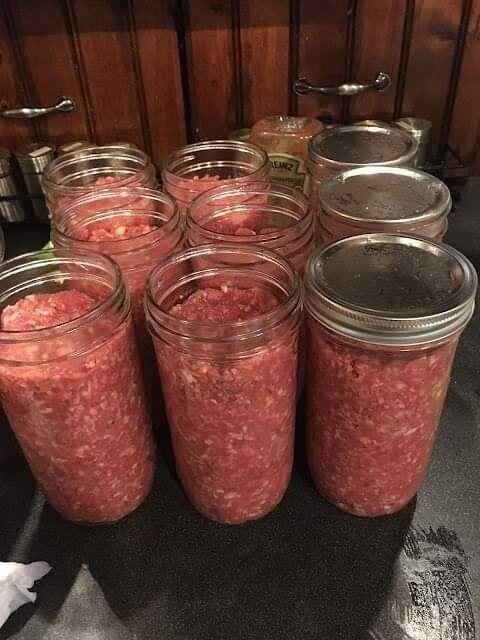
Seal jars. Wipe rims clean, place lids on jars, and screw bands on until just fingertip-tight.
Process in pressure canner. Place jars in the canner, lock the lid, and leave the vent open. Turn heat to high and allow steam to vent continuously for 10 minutes. Close the vent to pressurize.
-
For altitudes below 1,000 ft, process at 11 PSI on a dial-gauge canner or 10 PSI on a weighted-gauge canner.
-
Processing times: 75 minutes for pint jars, 90 minutes for quart jars.
Cool and check seals. Turn off heat and allow canner to depressurize naturally. Remove jars and let them cool for 12–24 hours. Check seals, label, and store in a cool, dark place for up to one year.
Safe Alternative #2: Freezing
If you prefer to preserve the complete, ready-to-cook meatloaf, freezing is the safest and easiest option.
-
Bake, then freeze: Cool the fully baked meatloaf completely, then wrap it tightly in a double layer of plastic wrap and heavy-duty foil before freezing.
-
Slice, then freeze: Freeze individual slices on a baking sheet before transferring to a freezer bag.
-
Freeze raw for later baking: Shape the raw mixture into a loaf, freeze on a tray until solid, then wrap it tightly.
🚫 Important: Why You Shouldn’t Can Traditional Meatloaf
The density of a typical meatloaf (with its eggs, breadcrumbs, and sometimes tomato sauce) does not allow heat to penetrate to the center of the jar evenly, even with a pressure canner. This means harmful bacteria can survive, creating a serious risk of food poisoning.
