
A sensible diet: more fruits, vegetables, legumes, whole grains, nuts, and oily fish. Why is this so dangerous?
Untreated high cholesterol can lead to:
Myocardial infarction
Stroke (CVA)
Peripheral artery disease
That’s why it’s called the “silent enemy.”
The only sure way to find out:
A simple blood test, called a lipid profile, is the most effective way to detect high cholesterol.
It’s recommended every 4-6 years for healthy adults, and more often if you suffer from obesity, have high blood pressure, smoke, or have a family history of high cholesterol.
How can you prevent it naturally?
The good news is that high cholesterol can be prevented and controlled by making simple lifestyle changes:
Eat wisely: Eat more fruits, vegetables, legumes, whole grains, nuts, and oily fish.
Limit your intake of trans fats and sugars: found in highly processed foods, fried foods, and fast food.
Regular physical activity: Walking 30 minutes a day can be beneficial.
Avoid tobacco and excessive alcohol consumption.
Maintain a healthy weight and manage stress.
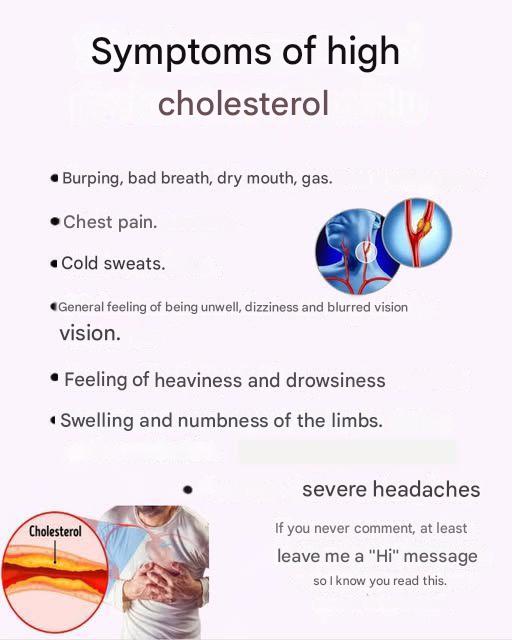
Remember: high cholesterol doesn’t give any warning signs, but your body leaves subtle signals.
Prevention starts with listening to these signals and getting regular checkups.
Want a list of the most effective foods to lower cholesterol naturally?
Don’t miss it in the next post.
