
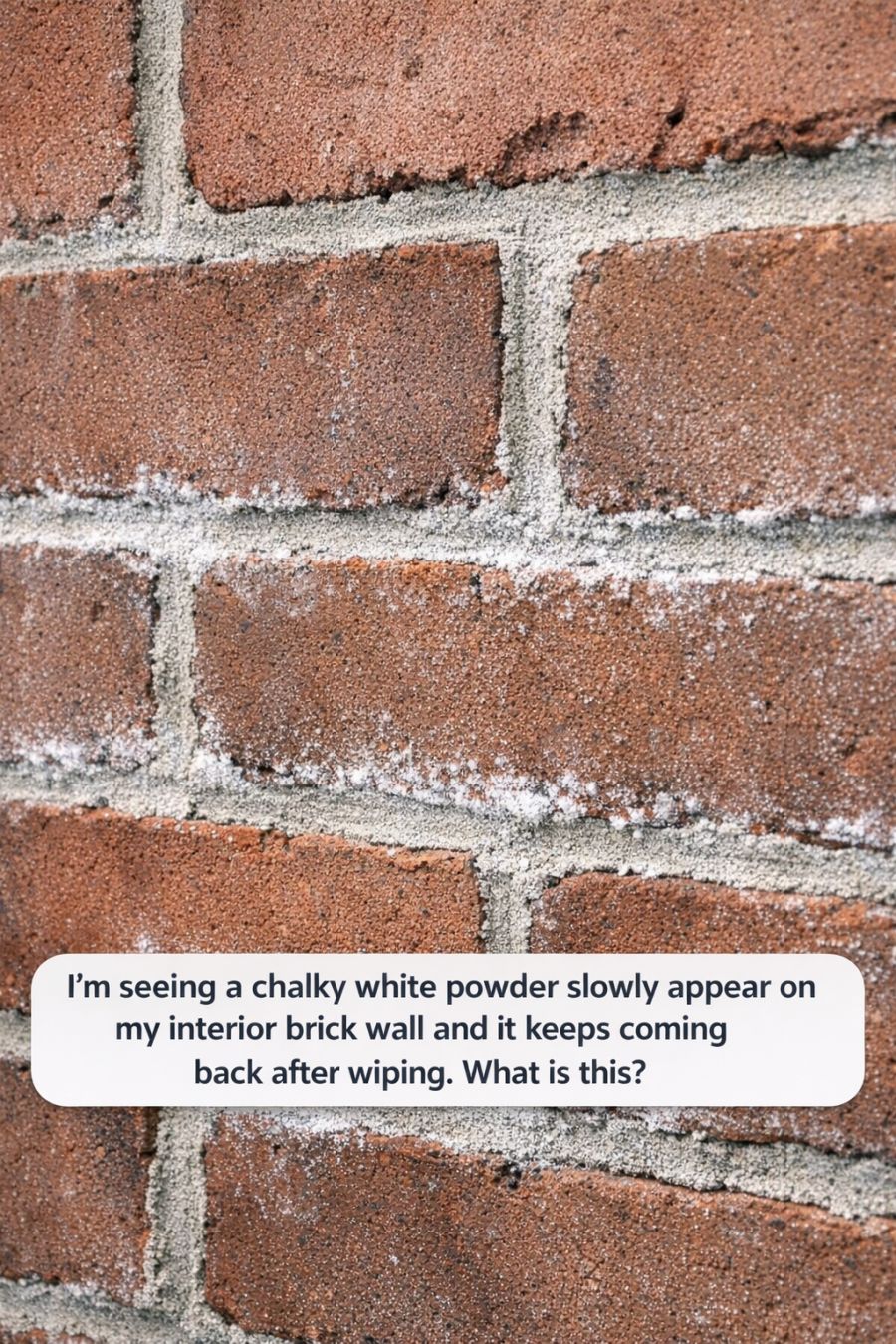
If you’ve noticed a mysterious chalky white powder appearing on your interior brick walls, you’re not alone. This common phenomenon can be puzzling and frustrating, especially when it reappears after you’ve just cleaned it away. Homeowners often find themselves asking what this substance is and why it seems to have a stubborn presence.
Understanding what’s happening on your walls is crucial not only for aesthetic reasons but also because it can be indicative of underlying issues. This article will delve into the nature of this powdery residue, why it keeps coming back, and what steps you can take to address the problem effectively.
Advertisement
1. What That Chalky White Powder on Brick Actually Is
The chalky white powder you’re seeing is likely efflorescence, a crystalline deposit of salts that can form when water is present on or in masonry surfaces. Efflorescence is primarily composed of soluble salts, which can come from various sources, including the mortar, bricks, or even the soil around your home.
When water containing these salts moves through the masonry, it eventually reaches the surface and evaporates, leaving the salts behind as a white, powdery residue. This can happen both indoors and outdoors, but in interior settings, it often indicates a moisture ingress issue that needs attention. Efflorescence itself isn’t harmful, but it can be a sign of moisture problems that could lead to more significant issues.
2. How Efflorescence Forms Inside Your Home
Efflorescence forms through a process involving three essential factors: soluble salts, moisture, and a channel for the moisture to move through. When water permeates your brick walls, it dissolves the salts present in the bricks or mortar. As this water migrates to the surface and evaporates, it leaves behind the crystalline salt deposits.
For efflorescence to appear inside your home, there must be a source of water infiltration. This could be due to leaks, condensation, or even high humidity levels in your home. Since bricks are porous, they readily absorb moisture, which facilitates the transport of salts to the surface.
3. Why It Keeps Coming Back After You Wipe It Off
Efflorescence can be particularly frustrating because it often returns after cleaning. The reappearance is typically due to persistent moisture problems that haven’t been addressed. Even if you wipe away the surface salts, the source of moisture that is carrying new salts to the surface remains.
Without addressing the underlying moisture issue, you can expect the efflorescence to return. This cyclical process will continue until the source of the water ingress is identified and remedied, preventing water from penetrating the walls and carrying salts to the surface.
4. Common Moisture Sources Behind Interior Brick Walls
There are several potential sources of moisture that can lead to efflorescence on interior brick walls. Common culprits include plumbing leaks behind the wall, roof leaks that allow water to run down interior structures, and poor drainage around the foundation that permits water to seep through basement walls.
Additionally, high indoor humidity, often caused by inadequate ventilation in bathrooms or kitchens, can contribute to moisture accumulation in brick walls. Identifying and addressing these moisture sources is crucial in preventing the recurrence of efflorescence.
5. How to Tell Efflorescence From Mold, Mildew, or Paint Damage
Efflorescence is often confused with other substances such as mold, mildew, or paint damage. However, there are distinctive characteristics that set it apart. Efflorescence typically appears as a white, powdery substance, whereas mold and mildew are more likely to be darker in color and may have a musty odor.
To differentiate, you can perform a simple test by spraying water on the affected area. Efflorescence will dissolve in water, while mold and mildew will not. Paint damage, on the other hand, often involves peeling or flaking paint, which is not a characteristic of efflorescence.
6. Simple Tests You Can Do to Confirm It’s Efflorescence
To confirm that the substance on your brick walls is efflorescence, you can conduct a few simple tests. First, try brushing or wiping the powdery substance with your hand. Efflorescence will brush off easily, while mold or mildew may smear.
Another test involves using a damp cloth to wipe the area. Efflorescence should dissolve and be removed with water, whereas mold or mildew will remain. If you’re still unsure, you can collect a small sample of the substance and dissolve it in water. If it dissolves completely, it’s likely efflorescence.
7. Safe Ways to Clean Efflorescence Off Interior Brick
Cleaning efflorescence off your interior brick walls is a straightforward process, but it must be done carefully to avoid damaging the surface. Start by using a dry brush or a vacuum with a brush attachment to remove loose powder.
For more stubborn deposits, mix a solution of vinegar and water (1:1 ratio) and apply it to the affected area with a sponge. After allowing it to sit for a few minutes, scrub gently with a soft brush and rinse with clean water. Always wear gloves and ensure adequate ventilation when cleaning with vinegar.
8. When Cleaning Isn’t Enough: Fixing the Moisture Problem
If efflorescence continues to return after cleaning, it’s crucial to address the underlying moisture issue. Start by inspecting your home for leaks, such as faulty plumbing or roof issues. Ensure that gutters and downspouts are directing water away from the foundation.
Improving ventilation can also help reduce indoor humidity. Use exhaust fans in bathrooms and kitchens, and consider using a dehumidifier in particularly damp areas. Sealing brick walls with a vapor-permeable sealant can also reduce water absorption without trapping moisture inside.
9. Long-Term Risks of Ignoring Efflorescence on Interior Walls
Ignoring efflorescence can lead to several long-term risks. While the efflorescence itself is not harmful, it indicates that moisture is present in your walls, which can lead to structural damage over time. Persistent moisture can weaken mortar joints and cause bricks to deteriorate.
Moreover, unchecked moisture can create a conducive environment for mold and mildew growth, which can pose health risks to occupants. Addressing the root cause of efflorescence not only preserves your home’s structural integrity but also ensures a healthier indoor environment.
10. When to Call a Pro for Persistent Efflorescence Issues
If you’ve attempted to resolve efflorescence issues on your own but the problem persists, it may be time to call a professional. A contractor or building inspector can conduct a thorough assessment of your home to identify hidden moisture sources and recommend appropriate solutions.
Advertisement
Professional intervention is especially important if structural damage is suspected or if you’re unable to locate the source of moisture. Experts have the tools and experience to effectively address complex moisture issues, ensuring long-term solutions to efflorescence and related problems.
