
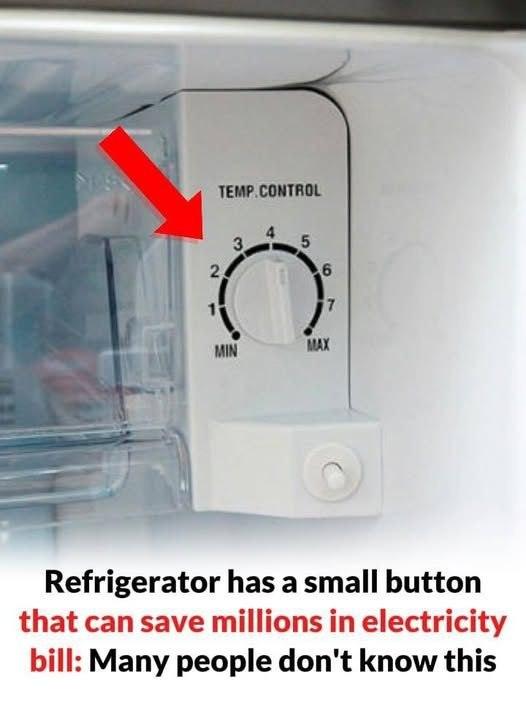
Most people don’t realize that your fridge has a simple setting you can tweak during winter to save energy. Making this small adjustment can noticeably lower your electricity bill while keeping your food fresh and safe.
A Small Button That Saves Big
Refrigerators run nonstop all year, making them some of the most energy-demanding appliances in the home. On average, a large fridge uses 50–75 kWh per month, just behind stoves and water heaters. Because they operate continuously, even minor tweaks can add up to significant savings.
Adjusting for Winter
Most modern fridges have a temperature dial or digital panel with settings ranging from 1–5 or 1–6.
- Summer: Higher cooling settings are often needed.
- Winter: Lower levels are usually sufficient. Experts suggest setting the fridge to level 2–3, or even level 1. At level 1, the temperature usually stays around 2–5°C—perfect for food preservation while cutting energy use.
The freezer can also be adjusted. For everyday storage, lower cooling is fine, but if you’re keeping large amounts of fresh items like seafood, maintain -18°C to prevent spoilage.
Adjust According to How Full It Is
- Lightly stocked fridge: Lower cooling levels work well.
- Fully stocked fridge: You may need slightly higher settings to maintain safe temperatures.
