
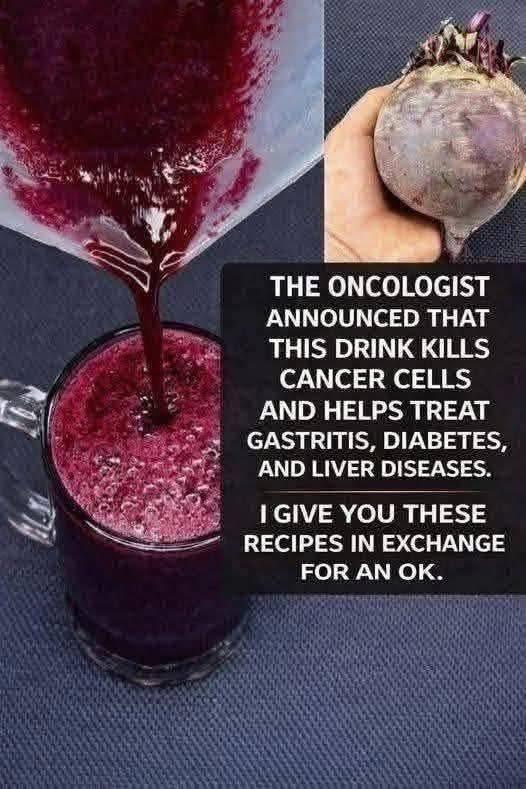
-
Anemia support – Beetroot contains iron, but it’s non-heme iron (less easily absorbed than iron from meat). Pairing it with vitamin C from green apple helps, but this juice is a supportive addition, not a treatment for diagnosed anemia.
-
Eye health – Carrots are genuinely good for eyes due to beta-carotene, but they won’t reverse vision loss. They help maintain healthy vision when part of a balanced diet.
-
Liver health – Beetroot and carrot contain antioxidants that support liver detoxification pathways. However, “cleansing” is misleading; your liver cleans itself. This juice simply provides nutrients that may help it function better.
How to Make It
Ingredients:
-
1 beetroot (peeled and chopped)
-
1 green apple (washed, chopped – keep the peel)
-
1 carrot (chopped or grated)
-
2 glasses of water
-
Optional: 1 teaspoon honey
Instructions:
-
Add all ingredients to a blender.
-
Pour in the water.
-
Blend until smooth.
-
Strain if you prefer a thinner texture.
-
Serve fresh, with ice if desired.
How to Use It Sensibly
-
Drink one glass in the morning, ideally on an empty stomach.
-
Try it for up to 7 consecutive days, then take a break.
-
Occasional use is fine – there’s no need to overdo it.
Important Caveats
-
This juice is not a medical treatment. If you have anemia, vision problems, or fatty liver disease, see a doctor.
-
Beetroot can temporarily turn urine or stool pinkish-red – that’s harmless.
-
People prone to kidney stones (oxalate-sensitive) should be cautious, as beets and carrots are high in oxalates.
-
The juice contains natural sugars; diabetics should monitor portion sizes.
The Bottom Line
Beetroot, green apple, and carrot juice is a genuinely nutritious drink. It can support iron levels, provide vitamin A for eye health, and offer antioxidants that help liver function. But it doesn’t fight anemia, restore vision, or cleanse a fatty liver on its own. Think of it as a helpful habit – not a hero. Enjoy it as part of a balanced diet, and keep expectations realistic.
