
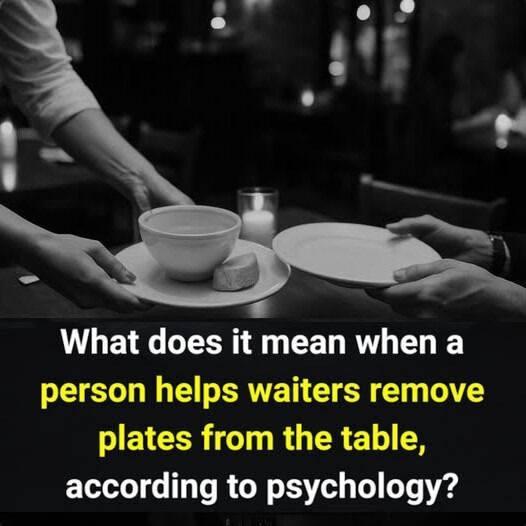
Most of us have done it: the meal ends, conversation fades, and the server approaches to clear the table. Before they even reach for a dish, you’ve already begun stacking plates and gathering utensils.
It might look like a small act of politeness, but psychologists suggest this habit—sometimes called “guest pre-bussing”—can say a lot about our personality and social behavior. Here’s what could be behind that simple gesture.
A Need for Order and Control
For some, a cluttered table feels mentally uncomfortable. Once the meal is over, leftover dishes stop representing food and start feeling like disorder.
- Mental Closure: People naturally seek a sense of completion. Moving your plate aside can signal to your brain that the experience has ended.
- Personal Space: Those who prefer organization often tidy up to restore a sense of calm and control in their surroundings.
Empathy and a Desire to Please
In psychology, individuals who score high in agreeableness—one of the Big Five personality traits—are more inclined to help others.
- Awareness of Others: You might notice a busy server and instinctively try to make their job a little easier.
- Keeping Things Smooth: Some people help out because they don’t want to feel like a burden and aim to keep social interactions positive.
