
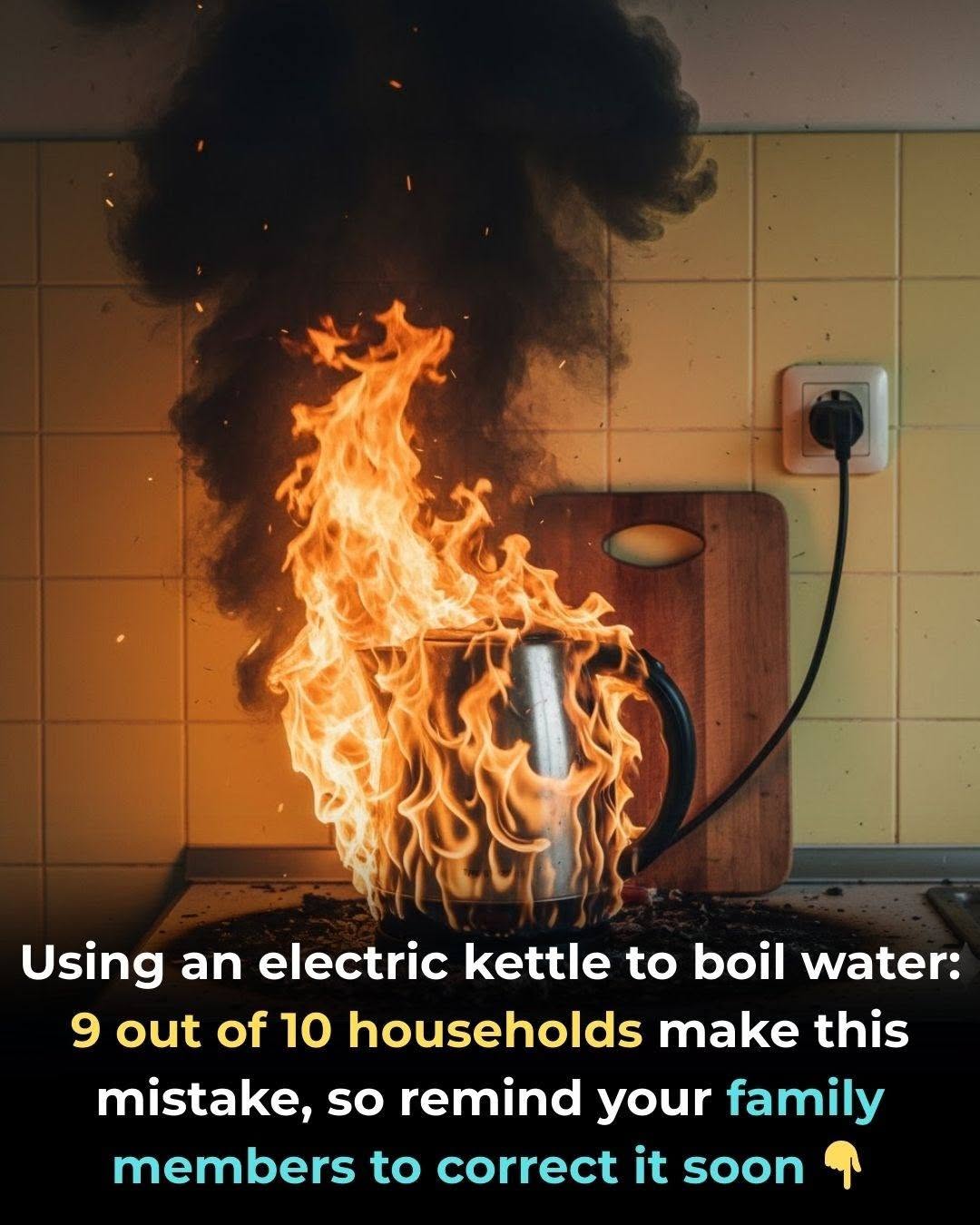
To use an electric kettle safely, always add water first, then place the kettle on its base, plug it in, and switch it on. Additionally, before placing the kettle on the base, check for any water on the base surface. If moisture is present, wipe it dry to prevent short circuits. After each use, unplug the kettle for added safety.
4. Pouring Out All the Water After Boiling
After boiling water, people often pour all of it into a thermos or water bottle for later use. However, it is better to leave a small amount of water inside the kettle.
The reason is that when the kettle has just switched off, the base remains hot. Pouring out all the water immediately can cause the thermal relay to dry out, which may affect its performance and shorten the kettle’s lifespan.
Ideally, leave a little water inside after pouring. Before the next use, discard the remaining water and rinse the kettle. This simple habit can help maintain the kettle’s durability and prevent premature damage.
5. Rarely Cleaning the Electric Kettle
Regular cleaning of the kettle interior is essential. If limescale is not removed over time, it gradually forms a yellowish layer at the bottom and sides of the kettle. Using a kettle with heavy scale buildup not only affects water taste and quality but may also pose health risks.
To remove limescale, pour white vinegar into the kettle and add about half a bowl of water, then boil the mixture. After the water boils, let it sit for around 10 minutes, then pour it out. You will notice that the scale has significantly loosened.
Next, wipe the interior with a clean cloth, and the remaining residue will be completely removed. Vinegar works effectively because limescale is alkaline, while vinegar contains acetic acid. The acid–base neutralization reaction helps dissolve and eliminate mineral deposits
