
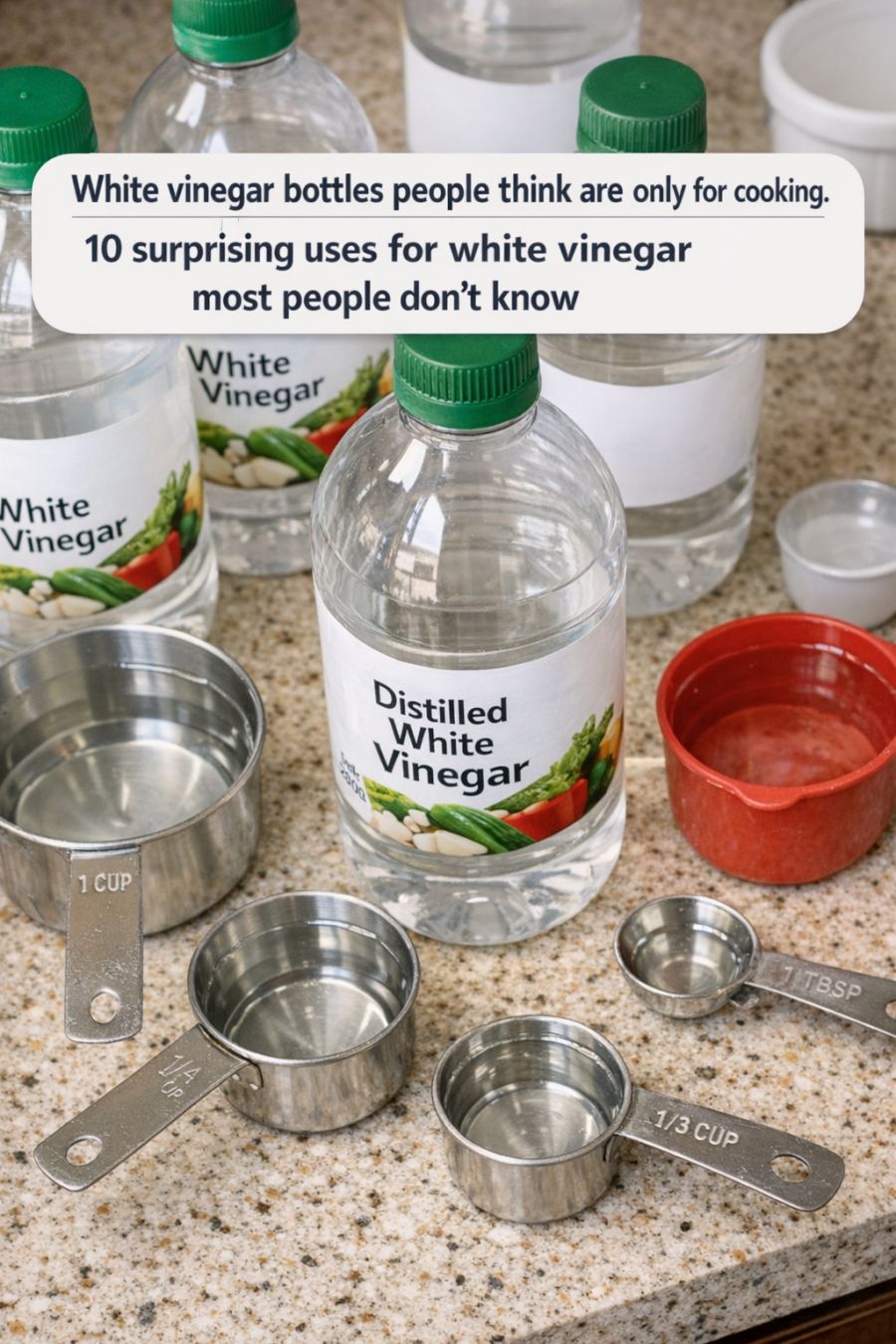
White vinegar, a staple in many kitchens, is often thought of as just a cooking ingredient, useful for pickling vegetables or adding a tangy zest to dishes. However, this humble liquid is far more versatile than it first appears, offering a multitude of benefits beyond the culinary sphere. Its acidic nature makes it a powerful cleaning agent and deodorizer, capable of tackling tough stains and unpleasant odors.
As more people seek out natural and cost-effective solutions for household challenges, white vinegar emerges as a hero, offering an eco-friendly alternative to harsh chemicals. From cleaning glass surfaces to freshening laundry, the uses for white vinegar are surprisingly diverse. In this article, we explore ten unexpected ways you can harness the power of white vinegar in your home.
If you’re tired of streaky windows and mirrors, white vinegar offers a simple solution. To create an effective glass cleaner, mix equal parts white vinegar and water in a spray bottle. For an added boost, consider adding a drop of dish soap to help cut through grime. Spray the solution onto the glass surface and wipe it clean with a microfiber cloth or crumpled newspaper, which helps prevent streaks.
This vinegar solution works wonders on mirrors, leaving them clear and reflective without the residue left by some commercial cleaners. The acetic acid in vinegar breaks down grease and mineral deposits, making it ideal for tackling water spots and fingerprints.
2. Deodorize a Smelly Washing Machine
Over time, washing machines can develop musty odors due to soap scum, mold, and mildew. To freshen your appliance, pour two cups of white vinegar directly into the drum or the detergent dispenser and run the machine on a hot water cycle without any laundry. For extra cleaning power, you can add half a cup of baking soda to the drum.
This method not only neutralizes unpleasant smells but also helps to remove soap residues and mineral build-ups. Regular vinegar cleaning can prolong the lifespan of your washing machine and ensure your clothes always come out smelling fresh.
3. Rescue Cloudy Wine Glasses and Dull Dishes
Hard water can leave wine glasses looking cloudy and dishes dull. To restore their sparkle, soak the affected glasses and dishes in a solution of one part white vinegar to three parts warm water for about 30 minutes. After soaking, wash them as usual with dish soap and rinse thoroughly.
The acidic nature of vinegar breaks down the mineral deposits responsible for the cloudiness, leaving your glassware and dishes looking as good as new. This simple remedy is an effective way to maintain the clarity of your kitchenware.
4. Remove Sticky Labels and Price Tags Effortlessly
Sticky labels and price tags can be stubborn to remove without leaving a sticky residue. White vinegar makes this task easier. Saturate a cotton ball or cloth with undiluted white vinegar and apply it to the label. Allow it to sit for a few minutes to let the vinegar penetrate the adhesive.
Once the adhesive has softened, peel off the label. For any remaining sticky residue, use the vinegar-soaked cloth to rub it away gently. This method is particularly useful for removing labels from glass jars, bottles, and other non-porous surfaces.
5. Unclog and Descale Showerheads and Faucets
Mineral deposits from hard water can clog showerheads and faucets, reducing water flow and efficiency. To descale these fixtures, fill a plastic bag with white vinegar and secure it around the showerhead or faucet with a rubber band. Let it soak for several hours or overnight.
After soaking, remove the bag and run water through the fixture to flush out loosened deposits. The acetic acid in vinegar dissolves the scale, restoring water flow and improving the overall performance of your plumbing fixtures.
6. Neutralize Pet Odors and Accident Spots
Pets are beloved members of the family, but they can sometimes leave behind unpleasant odors and accidents. To neutralize these smells, mix one part white vinegar with one part water in a spray bottle. Spray the solution onto the affected area and blot with a clean towel.
The vinegar works to neutralize the ammonia in urine, eliminating odors and deterring pets from marking the area again. For particularly stubborn odors, you may need to repeat the process or allow the vinegar to sit for a longer period before blotting.
7. Freshen and Disinfect Cutting Boards Naturally
Cutting boards, especially wooden ones, can harbor bacteria and odors from food. To clean and disinfect your cutting board, spray it with undiluted white vinegar and let it sit for a few minutes. Then, rinse the board with hot water and dry it thoroughly.
For a deeper clean, sprinkle baking soda over the board before spraying it with vinegar. The fizzing action helps lift stains and residues, leaving your cutting board fresh and ready for its next use. This natural method is effective and safe for maintaining your kitchen tools.
8. Revive Faded Towels and Soften Laundry
Over time, towels can become stiff and lose their vibrancy due to detergent build-up. To rejuvenate them, add half a cup of white vinegar to the rinse cycle of your washing machine. The vinegar helps dissolve residues, restoring the softness and absorbency of your towels.
For an added boost, you can combine vinegar with half a cup of baking soda in the wash cycle. This combination acts as a natural fabric softener and brightener, leaving your laundry fresh and fluffy without the need for commercial softeners.
9. Erase Hard-Water Rings From Toilets and Sinks
Hard-water rings can be unsightly and difficult to remove with standard cleaners. White vinegar offers a natural solution. Pour a cup of vinegar into the toilet bowl or onto the sink surface and let it sit for several hours or overnight. The acetic acid in vinegar breaks down the mineral deposits causing the rings.
After soaking, scrub the area with a toilet brush or a non-abrasive scrub pad to remove any remaining stains. This method not only cleans but also disinfects, leaving your bathroom fixtures spotless and germ-free.
10. Extend the Life of Fresh Flowers in a Vase
To keep cut flowers looking fresh for longer, add two tablespoons of white vinegar and two tablespoons of sugar to a quart of water. Pour this mixture into your vase before adding the flowers. The vinegar acts as an antibacterial agent, while the sugar provides nutrients to the flowers.
Advertisement
Change the solution every few days, trimming the stems each time to encourage water uptake. This simple trick helps maintain the vitality of your bouquet, allowing you to enjoy their beauty for an extended period.
