
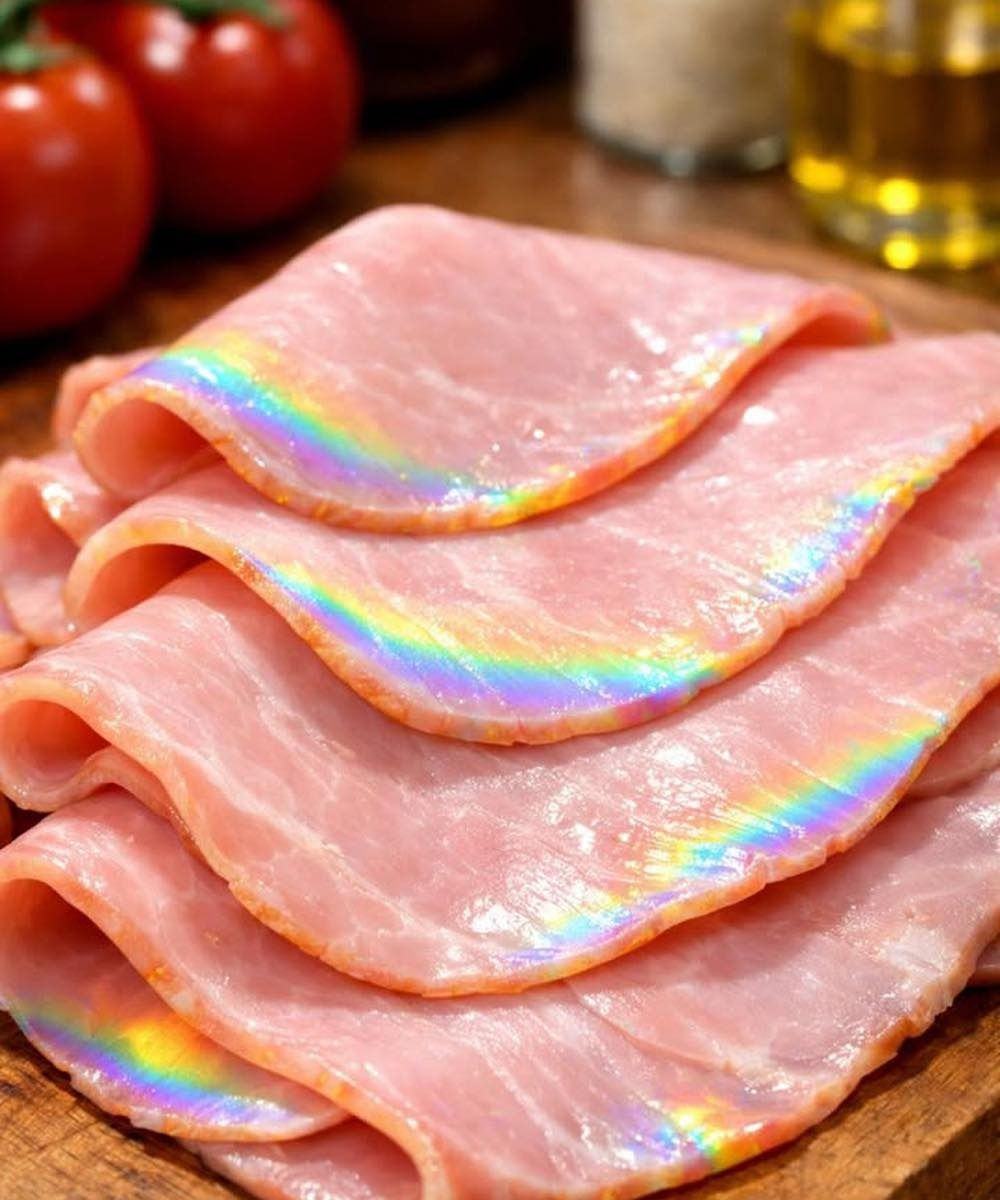
3. When a Rainbow Sheen Is Absolutely Normal
Seeing a rainbow-like sheen on cooked ham is usually harmless and perfectly safe. This is especially true when the meat has been stored properly and is still within its expiration date. The iridescent appearance is a natural characteristic of the meat’s structure and has no impact on flavor or nutritional quality.
Unless there are other warning signs, such as a strange odor or slippery texture, the colorful sheen is not cause for concern. In fact, many people associate this sheen with high-quality cured meats, well-prepared and properly sliced.
4. Visual Signs of Ham Spoilage
Although iridescence in itself isn’t a problem, certain visual changes can indicate that the ham is no longer safe to eat. Unusual color changes, such as green, gray, or brown hues, are clear signs of spoilage. The presence of mold, often visible as fuzzy growth or spots, is another clear warning sign.
If the surface of the ham appears excessively shiny or feels slippery and coated to the touch, it could indicate the presence of bacteria. In these cases, it’s safer to throw the meat away than to take risks.
5. Never Overlook Olfactory and Tactile Checks
Your nose and hands can be as important as your eyesight when evaluating a cooked ham. Fresh ham should have a delicate, slightly sweet smell. Any sour, ammonia-like, or otherwise unpleasant odor usually means the meat has gone bad.
Consistency is also important. The surface should feel dry or only slightly moist, not sticky or slippery. A slimy feel is a classic indicator of bacterial activity and is a clear sign that the ham should be discarded.
