
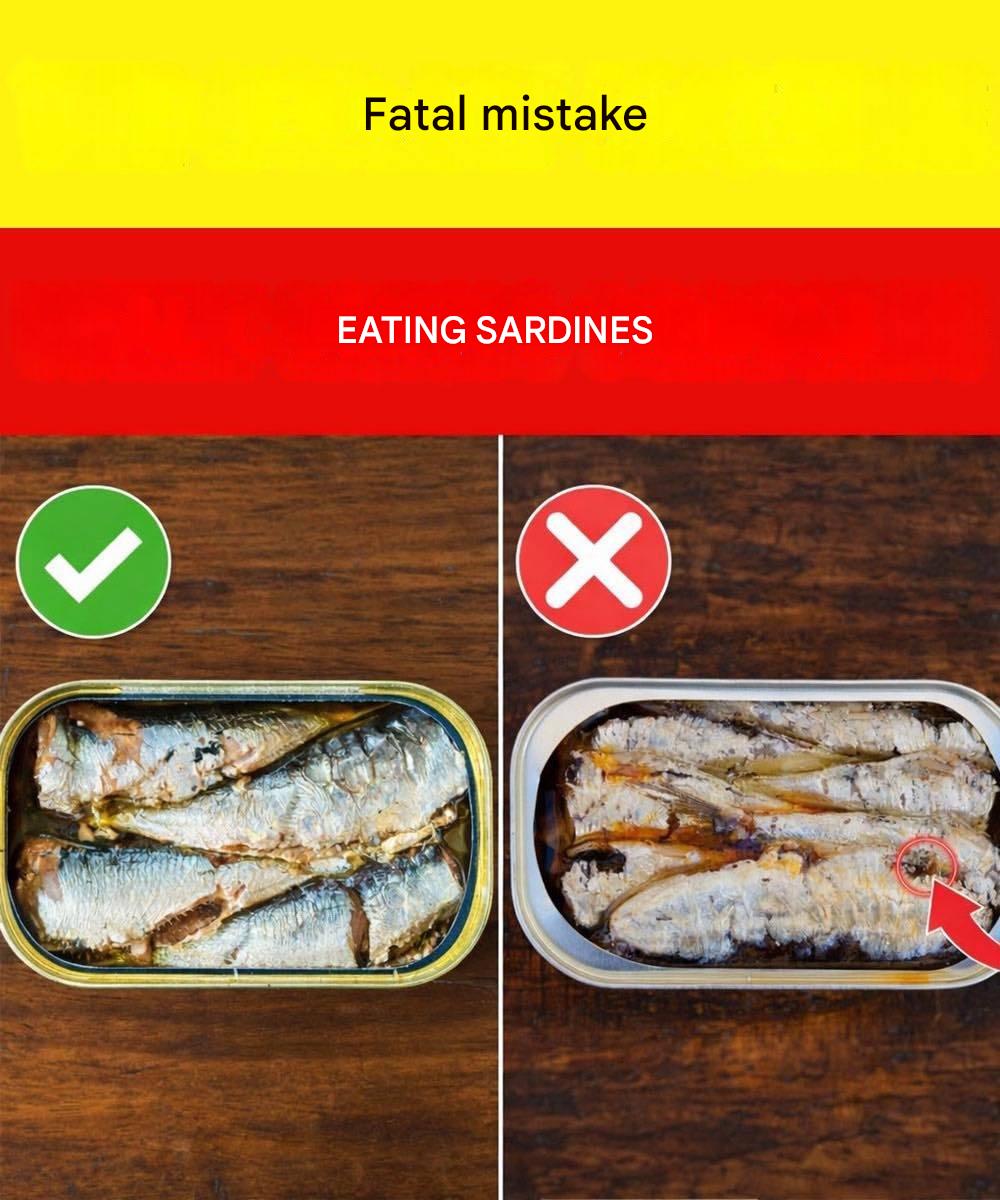
First Container Inspection:
The first line of defense against potential contamination is a thorough visual and tactile inspection of the container. Before even thinking about opening a can of sardines, turn it over in your hands and examine it from every angle. Look for any unusual signs that could indicate a problem, such as deep dents, swelling, rust, or leaks. A container in perfect condition should be firm, free of any warping or signs of corrosion.
It’s important to pay special attention to the top and bottom of the can, as these areas often represent weak points where problems can arise. Don’t be fooled by the brand name or the attractive price; the physical condition of the can is the most reliable indicator of the product’s safety. This habit of inspection is a simple routine that’s easy to incorporate into your daily meal preparation and will provide you with invaluable peace of mind.
Warning signs on a can:
Recognizing warning signs on a can of sardines is essential knowledge for every responsible consumer. These visual cues are the silent language of packaging, warning us of potential health risks, and understanding them is a valuable skill that protects us from consuming spoiled food.
Identifying swollen or dented cans:
Swollen cans are a clear and extremely serious warning sign. This swelling is usually caused by gases produced by anaerobic bacteria such as Clostridium botulinum, which can thrive in low-oxygen environments and produce dangerous toxins. Eating food from a swollen can can lead to serious food poisoning, including botulism, which can be fatal. Never, under any circumstances, open or taste the contents of a can with this symptom.
Dents, especially deep ones or those located on the edges or seams of the can, are also cause for concern. A dent can compromise the seal, creating invisible micro-cracks that allow bacteria and air to enter, potentially leading to product spoilage. While a superficial dent may not be a problem, when in doubt, it’s safer to discard the can and choose one in perfect condition. Caution is the best investment in your health.
Rust and Leaks as Indicators:
Rust on a can, especially extensive rust or perforation of the metal, is another clear sign that the product is unfit for consumption. Rust weakens the can’s material and can create small holes through which air and microorganisms can enter. A rusty can has been exposed to moisture or improperly stored, which could accelerate the deterioration of the product inside.
Leaks, even the smallest, are an even more serious sign. Any sign of liquid leaking from the can indicates a complete seal failure, and the contents are exposed to external contamination. Immediate disposal of leaking cans is an absolute safety measure, regardless of whether the product is expensive or inexpensive.
Dangers Associated with Damaged Packaging:
The dangers associated with damaged packaging go far beyond a simple unpleasant taste. Consuming contaminated food can cause a variety of ailments, from mild gastrointestinal symptoms to serious illnesses such as botulism, salmonellosis, or listeriosis, which can have devastating health consequences. These risks are particularly acute in canned foods, where the anaerobic environment favors the growth of specific and dangerous bacteria.
Understanding these risks is not intended to incite paranoia, but to encourage informed and responsible consumption. Exercise caution when purchasing and storing canned foods is an investment in long-term health. Always choose undamaged cans, with no signs of damage, even if the cost of disposing of a damaged can seems like a minor inconvenience. Health is priceless.
Criteria for Opening a Product:
After the can has passed the external inspection, the next critical step is opening it. The senses of smell and sight become the primary tools for the final inspection, providing key clues about the freshness and safety of the sardines before they reach the table. This sensory “test” is essential.
Unusual and Unpleasant Odors:
Smell is perhaps the strongest indicator of canned food spoilage. Upon opening a can of sardines, the smell should resemble that of fresh fish, even if it’s canned, perhaps slightly salted or with hints of the oil or sauce in which they are packaged. Any unusual, strong, sour, rancid, or rotten odor is a sure sign of spoilage. Do not taste the product if you detect a suspicious odor.
An unpleasant odor is the first and most important warning sign that bacteria have begun to decompose the food, producing harmful odors.
