
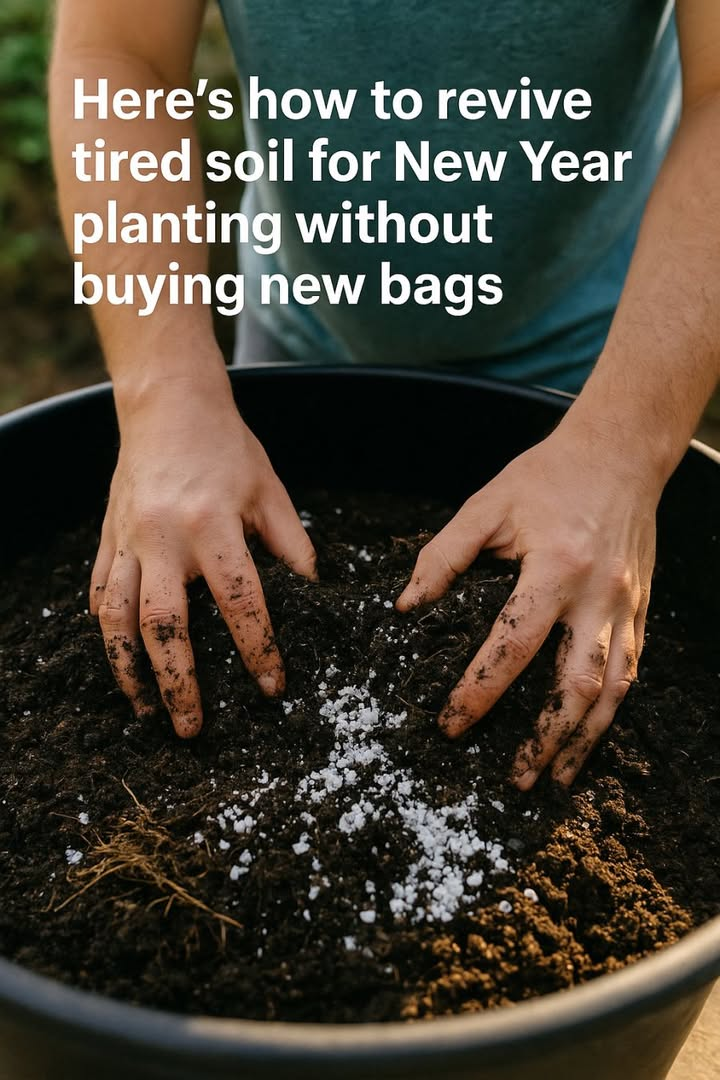
Restore Soil Microorganisms for Long-Term Health
Healthy soil is alive.
Beneath the surface lives a complex community of microorganisms that help break down organic matter and support plant nutrition. When soil is repeatedly used, microbial populations may decline.
You can encourage beneficial microbes by adding fermented organic solutions or compost tea if available.
Another simple method is allowing soil to rest under sunlight for a few hours after loosening it. Sunlight exposure can help reduce harmful pathogens while maintaining beneficial microbial balance.
Avoid using strong chemical disinfectants, as they can kill both harmful and helpful microorganisms.
Adjust Soil Moisture Carefully
Many gardeners make the mistake of overwatering revived soil.
Tired soil that has been loosened and enriched with organic material may hold moisture differently from fresh soil. Water slowly and observe how quickly water is absorbed.
The goal is moist soil, not soggy soil.
Check soil condition by inserting a finger about two to three centimeters deep. If the soil feels damp but not sticky, the moisture level is appropriate.
Proper moisture balance supports root establishment when you begin planting.
Let the Soil Rest Before Planting
One of the most overlooked steps in soil revival is allowing recovery time.
After mixing organic materials and adjusting soil structure, wait several days before planting new seeds or seedlings.
This resting period allows microbial activity to stabilize and prevents young plants from experiencing nutrient shock.
During this period, keep the soil lightly moist but avoid disturbance.
Think of it as giving the soil time to “digest” the nutrients you have added.
Rotate Plant Types for Better Soil Recovery
If possible, avoid planting the same type of plant repeatedly in the same soil.
Different plants absorb different nutrient profiles. Crop rotation helps prevent nutrient exhaustion and reduces pest accumulation.
For example, if you previously grew leafy vegetables, consider planting legumes next because they have the ability to enrich soil nitrogen naturally.
Even small-scale home gardening can benefit from simple rotation patterns.
Watch for Signs That Your Soil Is Recovering
After treatment, observe your soil and plants carefully.
Signs of successful soil revival include:
• Soil feels softer and more crumbly
• Water is absorbed more evenly
• New plants show healthy green leaf color
• Root growth becomes stronger
• Soil does not emit unpleasant odors
Recovery does not happen overnight. Soil improvement is a gradual process that may take weeks or even months.
Patience is an essential part of gardening.
Avoid These Common Mistakes
When trying to revive soil, avoid several frequent errors.
Do not add too much organic material at once. Excessive decomposition can temporarily reduce oxygen availability.
Do not overuse kitchen waste without proper preparation.
Do not compact soil again after loosening it.
And most importantly, do not rush planting immediately after major soil treatment.
Healthy soil restoration is about balance rather than intensity.
The Beauty of Reusing Soil
Reviving tired soil is more than a gardening technique. It reflects a mindset of sustainability and respect for natural resources.
Soil is not a disposable material. It is a living foundation that supports plant life, food production, and environmental harmony.
By learning to restore your existing soil instead of purchasing new bags each season, you reduce waste, save money, and build a more resilient garden ecosystem.
The New Year is often associated with new beginnings. But in gardening, sometimes the best beginning comes not from buying something new, but from caring better for what you already have.
With simple cleaning, aeration, organic enrichment, moisture management, and patience, tired soil can regain its strength.
As you prepare for your New Year planting, remember that great harvests do not always start with fresh soil from a store. Often, they start with soil that has been given a second chance.
And sometimes, the most productive garden is not the one with the newest materials—but the one where life has been carefully nurtured back into the earth beneath our feet.
