
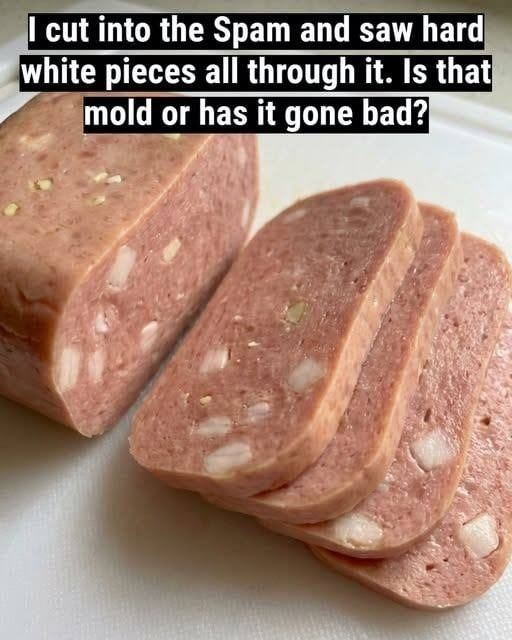
Those White Specks in Spam? Here’s What They Really Are (And Why You Can Relax)
You open a can of Spam, ready to slice it up for breakfast, and then you see them: little white flecks scattered throughout the pink meat. For a split second, your brain goes there. Is that mold? Did I just waste four dollars on a can of mystery meat?
Take a breath. Put the trash can away.
Those white specks aren’t a sign that something has gone wrong. In fact, they’re a sign that everything has gone right. Here’s the real story behind Spam’s most misunderstood feature.
First, a Quick Look at What Spam Actually Is
Before we talk about the specks, it helps to understand what you’re actually eating. Spam is a cooked canned meat product made from pork shoulder and ham. It’s mixed with salt, water, sugar, potato starch, and a touch of sodium nitrite to keep it fresh and give it that signature pink color.
Importantly, Spam is made from whole-muscle cuts of meat. That means it contains both lean protein and natural fat—just like a good pork chop or a slice of bacon would.
And that fat? It’s not there by accident. It serves a purpose:
-
It keeps the meat moist during cooking and storage
-
It gives Spam that firm-but-tender texture
-
It carries flavor, making every bite rich and savory
-
It prevents the meat from turning into dry, crumbly mush
The whole mixture gets sealed in a can and cooked under pressure, which sterilizes it and allows Spam to sit on your shelf for years without going bad.
So, What Are Those White Bits?
Simple: they’re solidified pork fat.
Here’s why they show up:
-
Pork fat is naturally white or ivory-colored when it’s cold
-
When you refrigerate Spam, that fat firms up and becomes visible as smooth little lumps
-
These specks are distributed evenly throughout the can—not just on the surface
-
And here’s the magic part: when you cook Spam, those white bits melt right back into the meat, adding juiciness and flavor
So no, it’s not mold. It’s not a defect. It’s just fat doing what fat does.
How to Tell Fat From Mold (Just in Case)
Of course, it’s always good to know the difference. Here’s a quick guide:
| Feature | Solidified Fat | Mold |
|---|---|---|
| Color | White or ivory | Green, blue, gray, or black |
| Texture | Smooth, firm, waxy | Fuzzy, powdery, or slimy |
| Where it lives | Evenly scattered throughout | Only on surfaces, in patches |
| Smell | Mild, salty, meaty | Sour, musty, or off |
| Can condition | Intact, no bulging | Bulging, leaking, or badly dented |
Because Spam is cooked in a sealed can, mold growing inside is extremely rare. If the can is undamaged and unopened, the contents are protected from contamination.
When You Should Actually Worry
see continuation on the next page
