
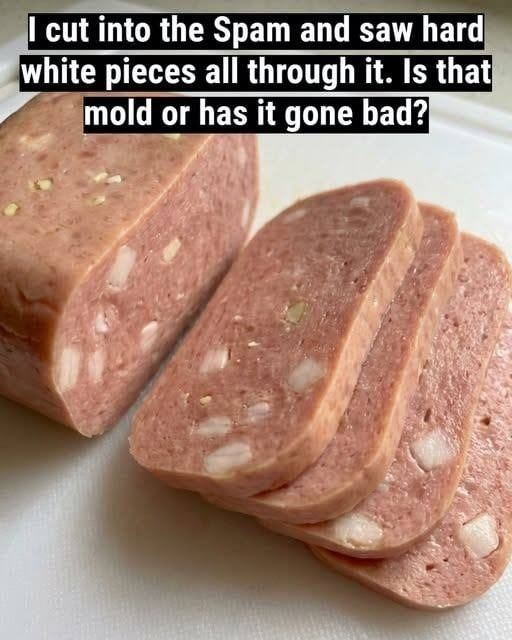
While white fat specks are harmless, there are times when Spam should not be eaten:
-
The can is bulging or swollen (that can mean bacteria is producing gas inside)
-
It’s leaking, or the seams are deeply rusted (the seal may be broken)
-
Upon opening, it smells sour, rancid, or like ammonia
-
The texture is slimy, or the color looks wrong beyond normal fat
Your senses are your best tool here. If the can is intact, the smell is clean, and the texture looks normal—those white bits are just fat, and you’re good to go.
What Happens When You Cook It
This is where the magic really happens.
Drop a slice of Spam in a hot skillet, and watch:
-
Those solid white specks soften, then melt into translucent oil
-
That oil fries the meat from the inside out, giving you a crispy exterior and a tender, juicy center
-
The specks literally disappear, absorbed back into the slice where they belong
It’s not a flaw. It’s physics. It’s flavor. It’s the reason Spam fries up so beautifully.
The Bottom Line
Those white specks aren’t a warning sign. They’re evidence that Spam is made with real cuts of meat—fat included—because fat matters. It’s why Spam slices cleanly, fries to golden perfection, and tastes the way it does.
So next time you spot them, don’t panic. You’re not looking at contamination. You’re looking at craftsmanship—the same ingredient that’s been keeping Spam moist, sliceable, and satisfying since 1937.
Still unsure?
-
Check the can. Intact? You’re fine.
-
Give it a sniff. Clean? Still fine.
-
Cook a slice. Fat melts. Mold doesn’t.
When all three check out, eat with confidence.
That little white speck isn’t a problem.
It’s the reason Spam tastes like home.
