
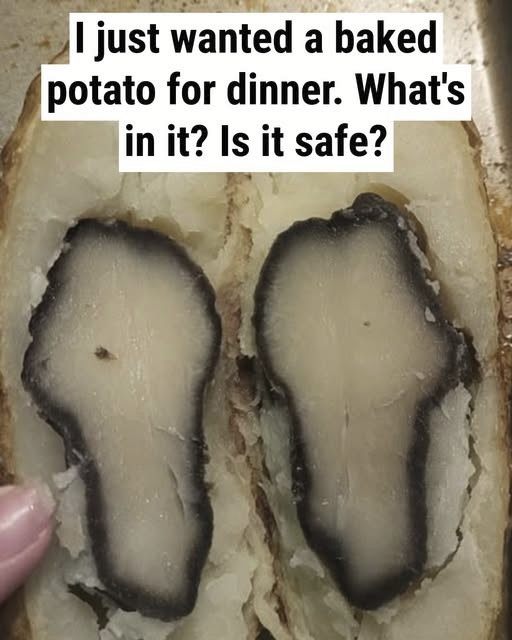
However, if the potato exhibits any of the following, you should discard it:
A sour or musty smell.
Softness or a slimy texture.
Green skin, which indicates the presence of solanine, a natural toxin found in potatoes.
The presence of mold.
How Can You Avoid Buying Potatoes with Black Rings Inside?
While it’s impossible to guarantee that you won’t end up with a potato that has internal black spots, there are steps you can take to minimize the chances of picking up a damaged or improperly stored potato.
1. Inspect Your Potatoes Before Buying
Before you buy potatoes, give them a gentle squeeze. Check for soft spots or dents, which can indicate that the potato has been mishandled. Soft spots are often a sign that pressure damage may have occurred, which can lead to the development of internal black spots.
2. Properly Store Potatoes at Home
Once you’ve purchased your potatoes, it’s important to store them properly to avoid internal bruising. Store your potatoes in a cool, dark place with good ventilation, like a pantry or paper bag. Avoid storing them in the fridge, as cold temperatures can disrupt the potato’s internal chemistry and increase the chances of internal black spots.
3. Buy from Stores with Frequent Produce Restocking
Grocery stores that frequently restock their produce are less likely to sell potatoes that have been sitting around for too long. Fresh potatoes are less likely to have developed internal black spots due to improper storage.
Understanding the Differences Between Black Spot, Blackheart, and Rot
To clear up any confusion, let’s take a closer look at the differences between black spot, blackheart, and rot:
Internal Black Spot: This is what you see when the potato has black or brown bruises or rings inside. The potato remains firm and is usually safe to eat after removing the affected areas.
Blackheart: This occurs when the entire central part of the potato turns black due to a lack of oxygen. Blackheart is often caused by improper storage and is usually more severe than internal black spot.
Rot: This is a more serious condition where the potato becomes soft, slimy, and emits a foul smell. If you see mold or a mushy texture, you should discard the potato immediately.
Additional Tips for Preparing and Cooking Potatoes with Black Spots
If you find yourself with a potato that has a black ring or internal bruise, it’s important to know the best way to handle it before preparing your meal. Here are some additional tips that will help you minimize waste and make the most of your potatoes:
For Complete Cooking STEPS Please Head On Over To Next Page Or Open button (>) and don’t forget to SHARE with your Facebook friends
